A retailer asks for the test report before accepting your protein powder shipment. Your sales executive forwards a PDF. Quality replies: “That’s the previous batch.”
Now everyone is searching WhatsApp, email and folders while the buyer waits.
For Indian food and supplement brands, the problem is often connecting the correct Certificate of Analysis (CoA) to the goods being supplied.
1. What buyers actually need from a CoA
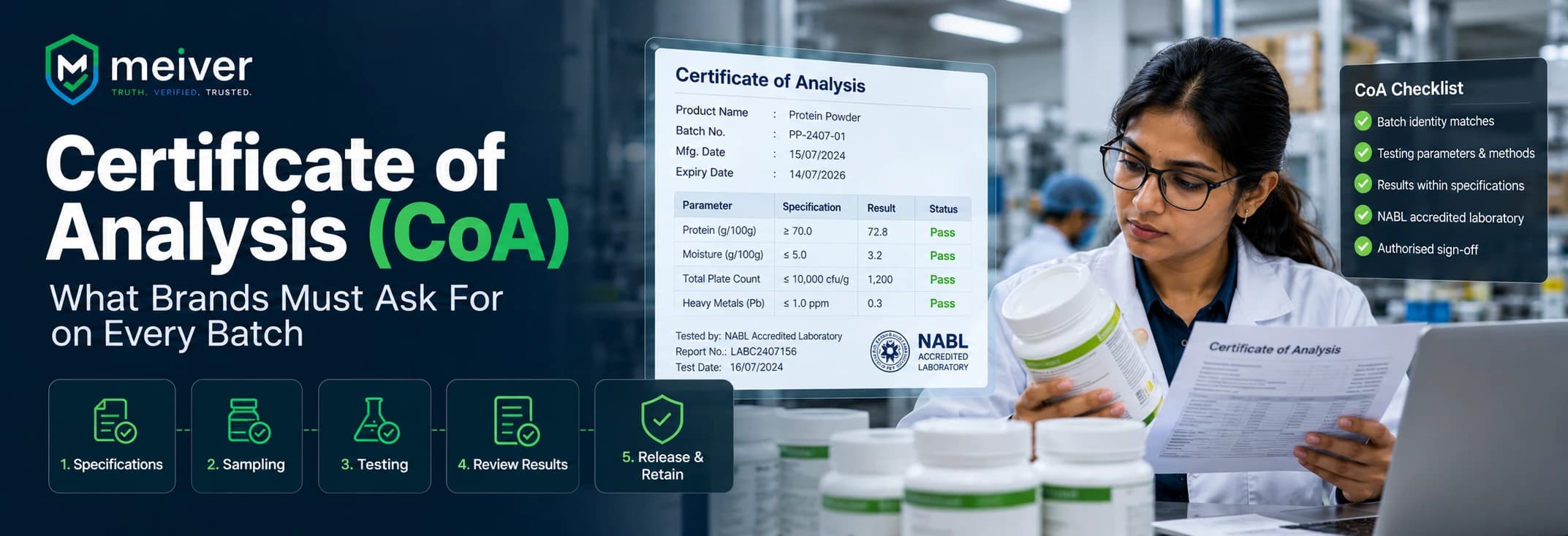
A CoA reports results for identified samples or batches against specified tests and limits. It helps buyers assess whether the evidence meets agreed requirements; it does not establish complete product safety or export compliance by itself. trade.gov
For protein powders, relevant parameters might include protein content, microbiological results and heavy metals, depending on requirements. Packaged foods need evidence appropriate to their ingredients, process and risks.
Before sharing, confirm:
Product name and batch/lot match the shipment.
Report reference, sample identity and testing dates are clear.
Methods, results, units and limits address agreed specifications.
Approval and original supporting reports are available.
2. Agree on requirements before dispatch
Ask the retailer or importer which documents, tests, formats and submission channels they require.
For exports, check both the buyer’s specifications and applicable destination requirements. A familiar domestic testing panel may leave gaps. Separate inspection or certification requirements may also apply; confirm these with the relevant authority and importer. trade.gov
Agree whether the buyer accepts a link or needs the original certificate of analysis PDF uploaded to its portal. Easier sharing only helps when the submission is usable.
3. Make the correct certificate easy to retrieve
A CoA certificate download should lead an authorised recipient to the correct original document.
Use consistent filenames containing the product, batch and report reference. Keep approved versions identifiable, preserve revisions and tell recipients when corrections affect previously shared evidence.
A useful CoA certificate of analysis format makes results easy to review. However, formatting a template or downloading a generic certificate does not create analytical evidence.
Sales should retrieve approved evidence; quality should verify it before sharing.
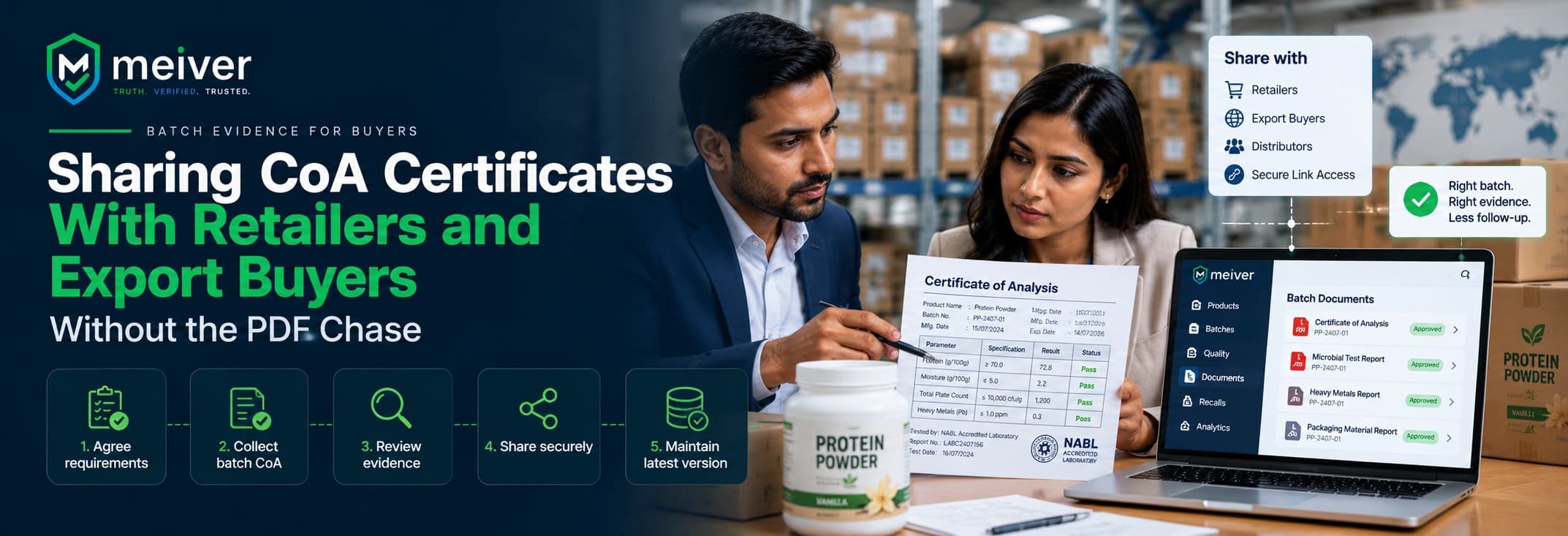
4. A five-step sharing process
Stage | Action | Purpose |
Agree | Confirm buyer specifications and document requirements | Avoid incomplete submissions |
Collect | Obtain batch-specific CoA and supporting reports | Match evidence to supplied goods |
Review | Check identity, results, approval and document version | Prevent incorrect sharing |
Share | Provide the agreed link or original file | Support buyer review |
Maintain | Preserve revisions and notify recipients of corrections | Keep evidence current |
5. Connect buyer evidence with consumer trust
Meiver links original laboratory PDFs and structured test results to batch records. Brands can display selected evidence on consumer pages and control which data fields remain internal.
That makes the right batch evidence easier to locate and share. Confidential reports should follow the buyer’s agreed access arrangements.
For certificate of analysis packaging enquiries, distinguish packaging-material test evidence from finished-food results. A packaging QR code can direct shoppers to selected batch information; it does not replace required labelling.
Brands can connect useful transparency content with product pages, retailer presentations, buyer emails and packaging QR journeys. These create routes to evidence and enquiries, without guaranteeing traffic or sales.
Conclusion
The PDF chase ends when teams can confidently answer: “Is this the evidence for this shipment?”
FAQs
How to get certificate of analysis (CoA)?
If you’re asking how to get certificate of analysis or where to get certificate of analysis, request it from the manufacturer or responsible quality team, or commission appropriate testing.
Is a certificate of analysis sample PDF sufficient?
No. A sample illustrates structure or previous testing; it is not evidence for the supplied batch.
Certificate of Quality vs Certificate of Analysis: what differs?
A Certificate of Quality depends on its issuer, scheme and buyer requirements. Do not automatically treat it as a CoA.
Certificate of Origin vs Certificate of Analysis: what differs?
Origin documents establish the goods’ origin for trade purposes. A CoA reports specified analytical results.