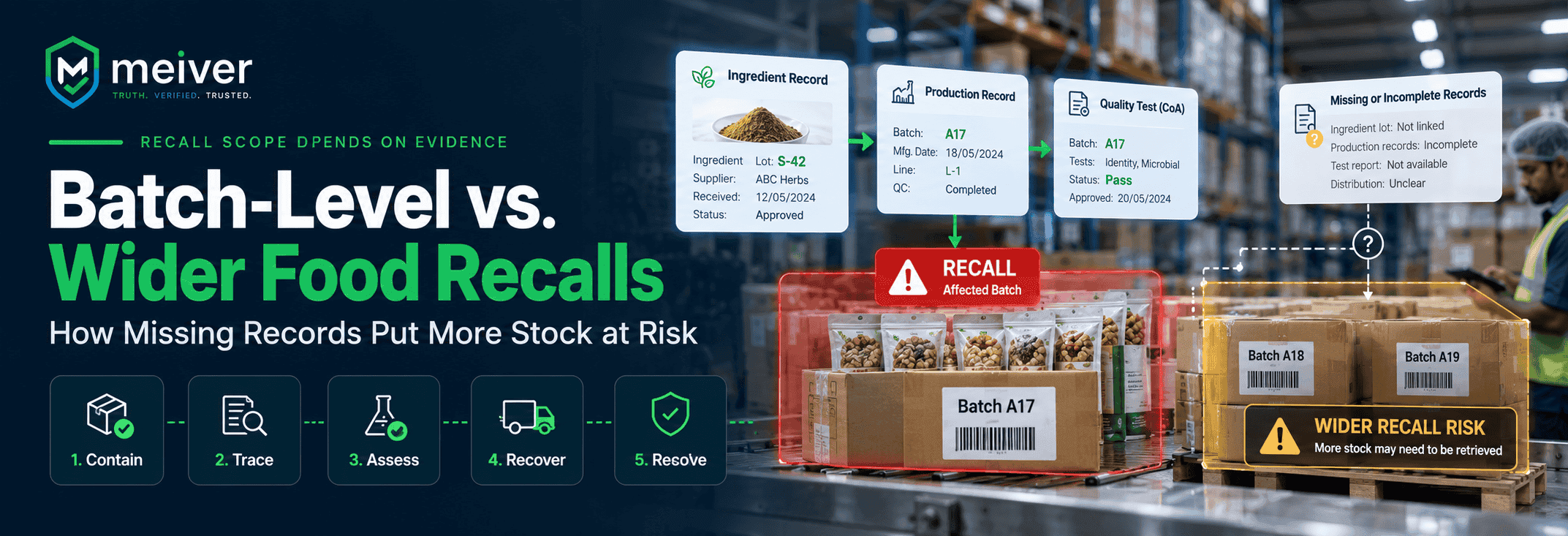
Your manufacturer says the stock is ready. Dispatch is tomorrow. Then the “lab-tested” proof arrives: a PDF with no matching batch number.
Do you release the goods?
For brands outsourcing food and supplement production, a certificate of analysis should help answer a practical question: what evidence supports accepting this particular batch?
What Is a Certificate of Analysis?
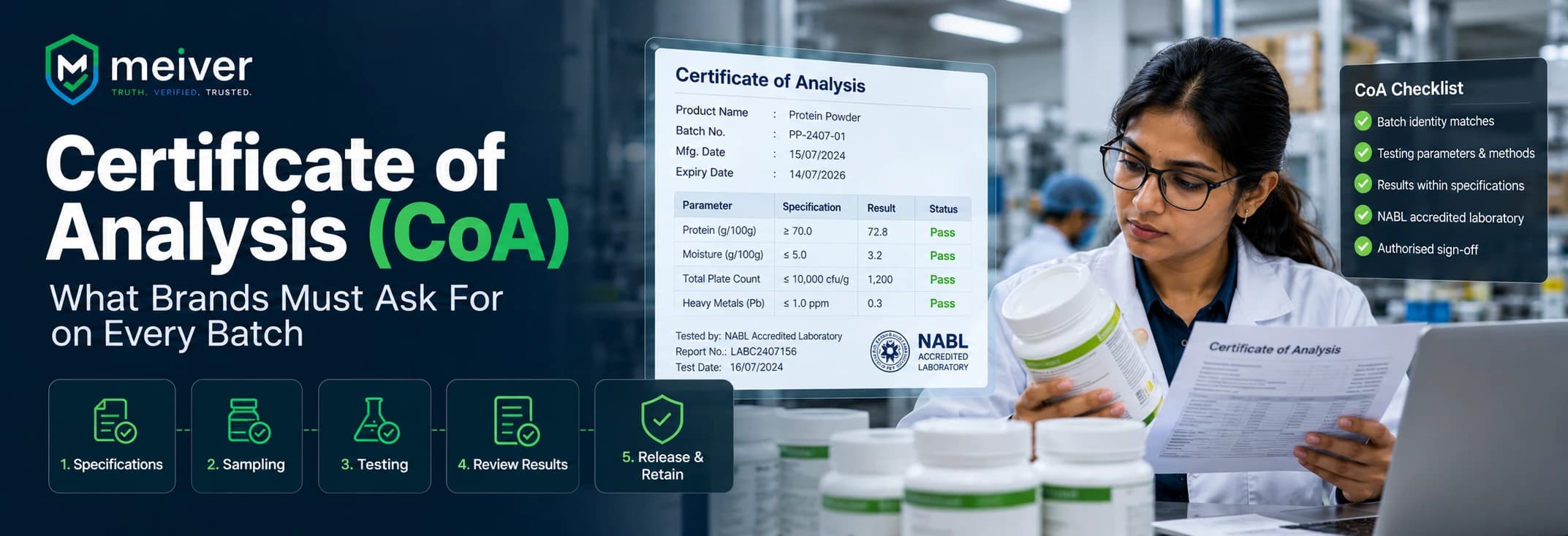
A certificate of analysis (CoA) records test results for an identified material or product against stated specifications. The CoA certificate meaning is straightforward: documented analytical evidence, with a defined scope.
A manufacturer-issued CoA and an independent laboratory report are different documents. Ask who issued the certificate and which underlying reports support its results.
Neither document guarantees every unit, every possible hazard or performance throughout shelf life.
What Brands Should Request on Every Batch
Make a batch-specific CoA or agreed release-evidence package a procurement expectation. This checklist is a recommended review framework, rather than a universal statutory format:
Product identity: Product name, batch number and relevant manufacturing or expiry dates matching the supplied goods.
Sample traceability: Sample reference, source, sampling responsibility and testing dates.
Tests and specifications: Relevant parameters, methods, units and acceptance limits.
Actual results: Numerical measurements or appropriate qualitative findings, compared with agreed specifications.
Issuer and authorisation: Manufacturer or laboratory identity, report reference and authorised sign-off.
For protein powder, discuss protein content and relevant safety parameters. For packaged foods, select tests appropriate to ingredients, processing and storage.
“On every batch” does not mean every food batch legally requires a complete external testing panel. FSSAI’s clarification links testing frequency to risk assessment and historical data, with a minimum six-monthly frequency under the cited licence condition. Product-specific requirements may differ. fssai.gov.in
How to Read Certificate of Analysis Results
Start with identity, then compare each result with its specification. A prominent “PASS” cannot resolve a missing batch reference or mismatched units.
Consider this certificate of analysis example, labelled illustrative example: a protein powder report states protein in g/100 g, while your agreed specification uses grams per serving. Convert to the same basis before comparing.
A generic sample certificate of analysis shows the supplier’s format; it cannot establish the quality of today’s delivery.
For external testing, verify that the laboratory’s current NABL accreditation scope covers the relevant tests and methods. Accreditation does not automatically cover every service offered. NABL India
A Five-Step Batch Evidence Process
Step | Action | Evidence to retain |
1. Agree specifications | Define parameters, limits and testing responsibilities. | Approved specification and testing plan. |
2. Identify and sample | Match goods, batch and sample references. | Sampling record and batch details. |
3. Test | Use suitable methods and competent laboratories. | Original reports and method references. |
4. Review results | Compare findings; investigate gaps or failures. | Review record and investigation evidence. |
5. Approve and retain evidence | Document the release decision and link records. | Authorised decision and supporting documents. |
Turn Batch Evidence Into Useful Transparency
When reports sit across emails and WhatsApp messages, quality teams waste time finding the right version.
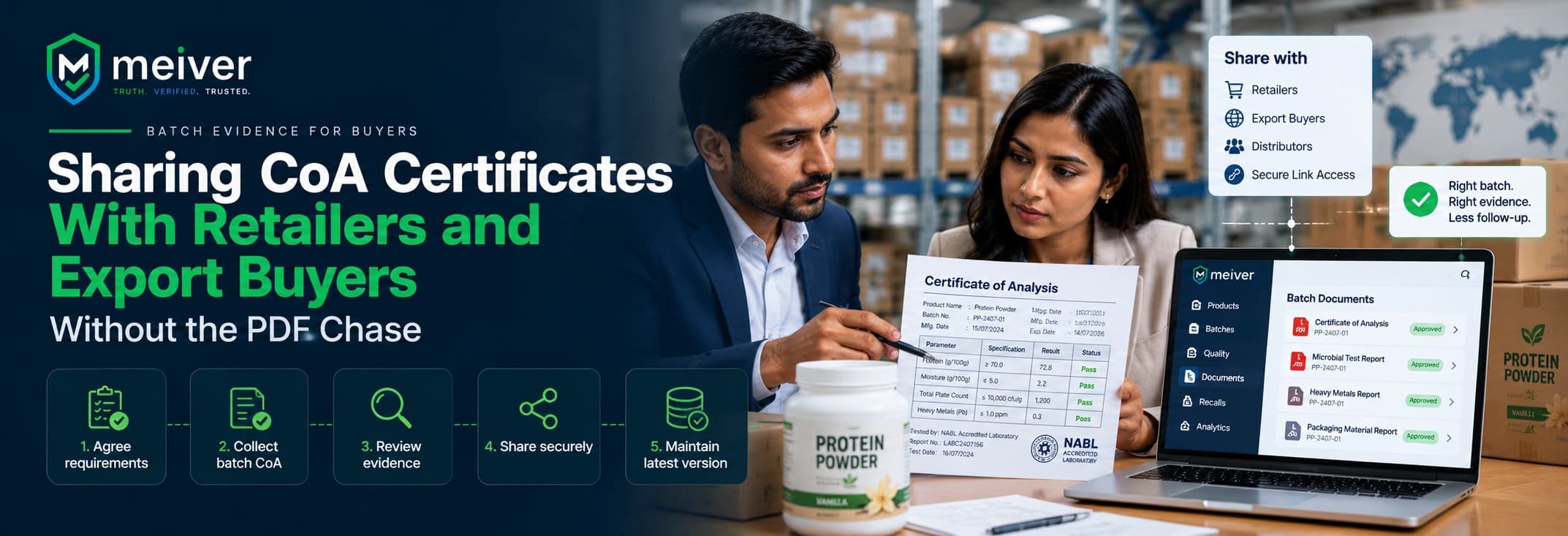
For teams evaluating certificate of analysis software, Meiver connects CoA templates, parameters, units, acceptable ranges, batch-specific results and original-report uploads. It compares results against configured thresholds and supports controlled consumer-facing visibility.
A configured pass status does not independently validate sampling, laboratory authenticity or regulatory compliance.
Approved evidence can support retailer discussions, product-page explanations and packaging QR journeys. Share useful context alongside results, without promising better rankings or sales.
Conclusion
Request evidence that matches the goods you receive, then review it before release.
Explore how Meiver connects each batch with its CoA, test results and supporting quality documents.
FAQs
What is CoA certificate evidence useful for?
It supports procurement and quality decisions by connecting identified products with documented test results and specifications.
Is a CoA certificate enough to approve stock?
No. Review sampling, relevant reports, production controls and unresolved deviations. A certificate supports an authorised release decision; it does not replace one.