A customer discovers your protein powder on Instagram, orders through your website and later buys it through quick commerce. Across those channels, can your team explain what is inside—and retrieve the records behind it?
For Indian food brands, managing FSSAI regulations means tracking separate changes to licensing, labelling, packaging and product standards. There is no single 2026 overhaul covering everything. Here is what deserves attention.
1. What changed in 2026?
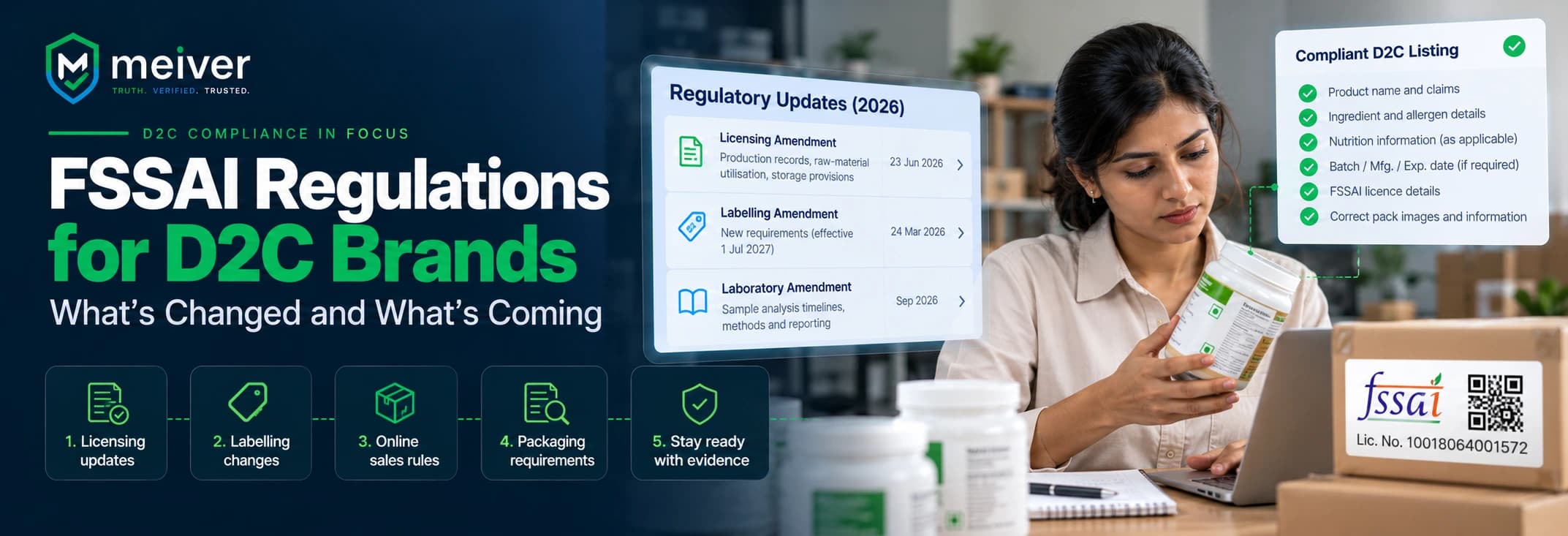
Final licensing amendment: The notification dated 23 June 2026 took effect on Gazette publication. It requires separate daily records of production and raw-material utilisation, exempting non-manufacturing food businesses from that condition. It also revises FIFO/FEFO storage provisions, with a retailer exemption. These distinctions matter when brands divide responsibilities with contract manufacturers. fssai.gov.in
Final laboratory amendment: FSSAI’s September listing covers sample-analysis timelines, methods and reporting formats. This should not be interpreted as a blanket instruction for every D2C brand to commission external testing of every batch. fssai.gov.in
2. What is coming for labelling?
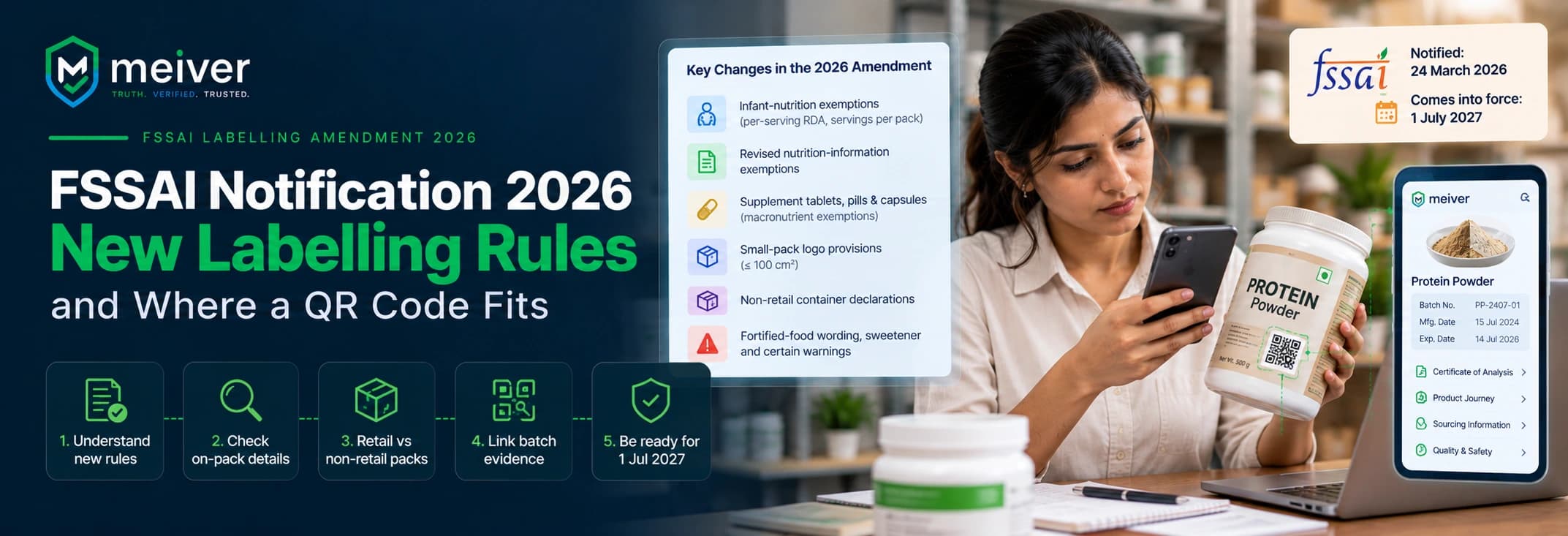
The Labelling and Display First Amendment Regulations, 2026, dated 24 March, are final but take effect on 1 July 2027.
Their scope includes infant-nutrition RDA disclosures, specified nutrition-information exemptions, small-pack logos and non-retail containers. They do not introduce an identical redesign requirement for every snack or protein powder. Check the provisions against your actual product and pack format before changing artwork. fssai.gov.in
3. Which proposals should brands watch?
A draft is a consultation document—not automatically an enforceable requirement.
The January 2026 licensing draft illustrates why status checks matter: a later June final notification addressed production records and storage provisions. Describing the whole subject as “still proposed” would now mislead readers. fssai.gov.in
Track each update as final, effective, draft or operational direction/order. For final amendments, record commencement dates and transition provisions separately. For orders, check the businesses addressed and the action required.
4. Online sales still need compliant information
Searches for “e commerce FSSAI regulations” often suggest a separate rulebook. In practice, obligations depend on the business’s role and applicable provisions.
The Labelling and Display framework requires mandatory label information before online sale, with specified exceptions including batch and date particulars. Review website and marketplace listings alongside pack artwork; an outdated image can leave customers reading yesterday’s information. fssai.gov.in
For FSSAI rules and regulations for packaging, assess packaging requirements separately from label declarations. Supplements also require checks against applicable nutraceutical regulations and product standards.
5. A five-step compliance evidence workflow
Step | Team action | Evidence to retain |
1. Classify | Confirm product category and business role | Applicable standards and permissions |
2. Assess | Check final text, scope and commencement | Dated regulatory change register |
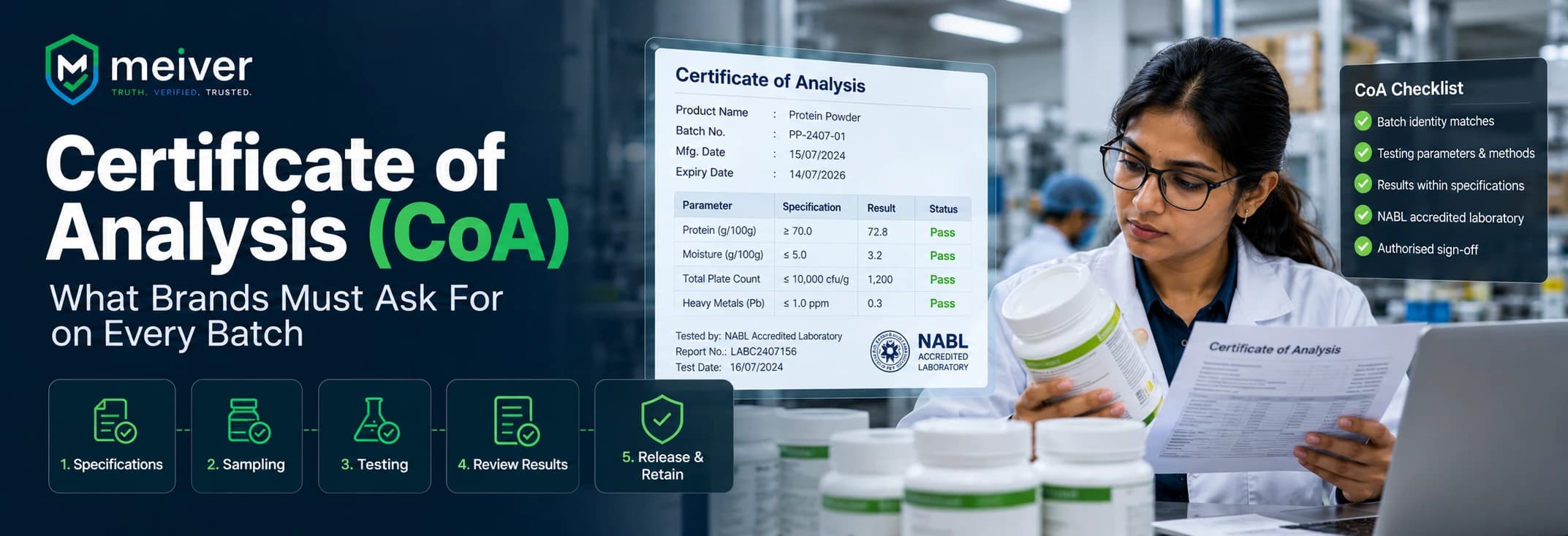
3. Connect | Link SKU, batch and manufacturing records | Production records and relevant reports |
4. Align | Review packs and online information | Approved artwork and listing versions |
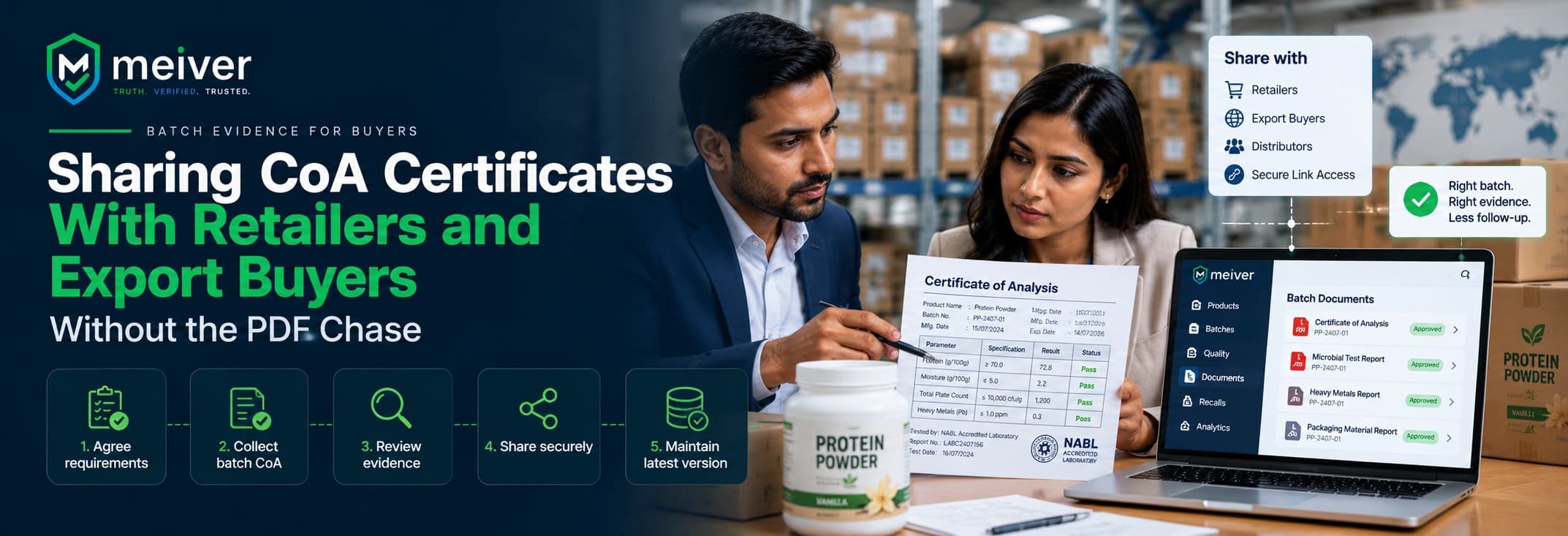
5. Share | Publish selected evidence through optional QR pages | Controlled consumer information |
A QR code supplements transparency; it does not replace mandatory declarations.
6. Conclusion: make trust easier to substantiate
When a retailer requests a report or a customer questions a claim, scattered files slow the response.
meiver connects SKUs, batches, production-stage records and supporting documents, with selected information available through consumer QR pages. It helps organise evidence; regulatory compliance remains the brand’s responsibility.
Start with one SKU: can your team retrieve its current label, batch record and relevant quality evidence together?
FAQs
What is the latest amendment of FSSAI regulations?
There is no universal answer. Check the relevant regulation’s amendment history, final Gazette text and effective date.
Where can I download an FSSAI rules and regulations PDF?
Use FSSAI’s official regulations and notifications pages. Read the principal regulation together with subsequent applicable amendments.
Is an FSSAI guidelines PDF legally binding?
Check its legal basis. FSSAI guidelines, regulations and operational directions are different instruments; a document’s title alone does not establish its status.
Do FSSAI rules cover food-regulated supplements?
Yes. Apply relevant supplement regulations, product standards and labelling requirements. Reviewing the latest FSSAI regulations means checking every applicable instrument, not one summary.