Authenticity Starts Before the Finished Pack
A customer asks whether your Ayurvedic medicine contains the ingredients promised on its label. Your manufacturer says yes. But can your team connect that assurance to the batch the customer bought?
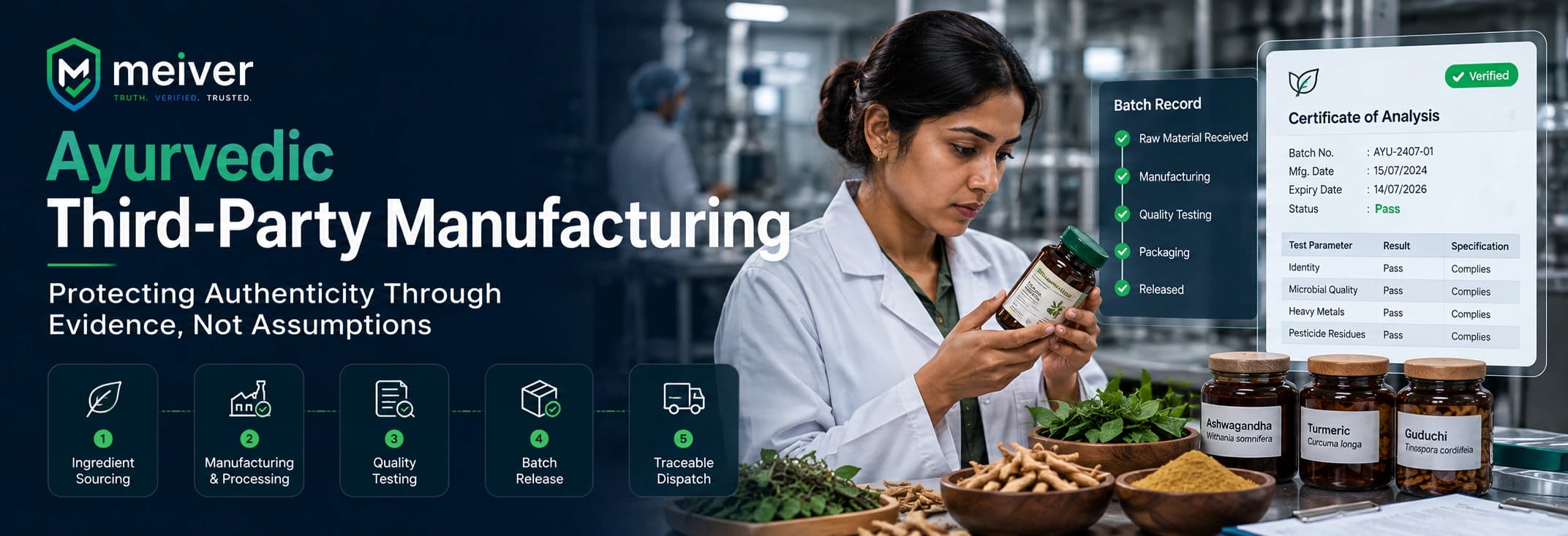
That is the challenge behind ayurvedic third party manufacturing. Outsourcing production can help a brand grow, but authenticity depends on evidence: correctly identified ingredients, the agreed formulation, documented processing, and batch-linked quality results.
For brand owners, procurement teams, and quality managers, those checks should begin before the first purchase order.
1. Confirm the Product Category and Licence
Before choosing an ayurvedic third party manufacturing company in India, establish the product’s regulatory category from its formulation, intended use, and claims.
Ayurvedic medicines fall under the Drugs and Cosmetics framework. Manufacturing licensing and enforcement sit with relevant State/UT authorities; applicable requirements include Schedule T GMP and pharmacopoeial quality standards. A July 2026 Ministry of Ayush update reaffirmed these obligations, including for products sold through digital commerce. Press Information Bureau
Herbal supplements classified as foods follow relevant FSSAI requirements. Herbal cosmetics third party manufacturing follows the cosmetics framework, including the Cosmetics Rules, 2020. “Herbal” alone does not establish a product’s category.
2. Verify Ingredient Identity and Sourcing
In third party manufacturing of ayurvedic products, an ingredient name on an invoice is only a starting point.
Ask the manufacturer to document:
Botanical identity and the plant part used.
Supplier details and incoming material lot numbers.
Acceptance specifications and relevant identity tests.
Storage conditions and rejected-material handling.
For example, root powder and an extract should not be treated as interchangeable without an agreed specification. Record substitutions and obtain approval before production.
These controls also matter in third party manufacturing of herbal products, where similar names can conceal different materials.
3. Keep the Formulation and Process Connected
A good prototype does not establish that every commercial batch follows the same process.
Your quality agreement should define the approved formula, processing instructions, permitted changes, document access, and responsibility for investigating deviations.
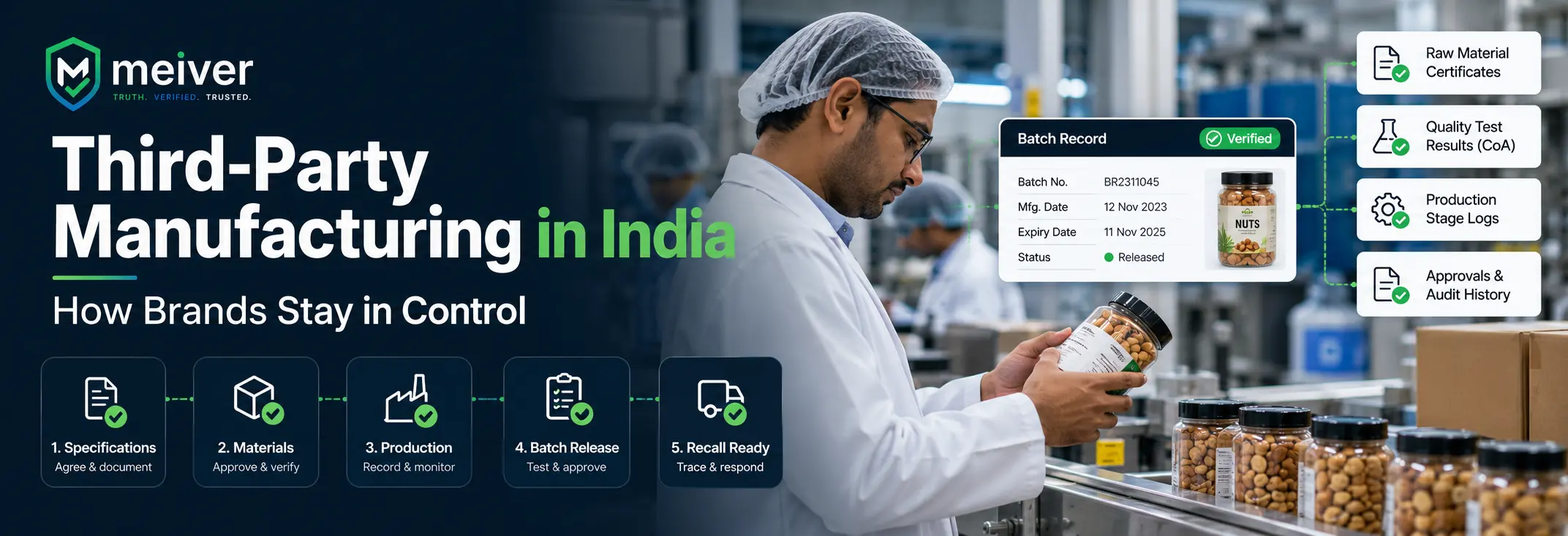
Request batch manufacturing records showing ingredient quantities, material lots, relevant processing conditions, yields, and checks. When selecting an ayurvedic third party manufacturing company, assess how clearly it explains an unexpected result—not simply how quickly it quotes.
4. Demand Batch-Specific Quality Evidence
For ayurvedic medicine third party manufacturing, request a Certificate of Analysis linked to the actual batch.
Review results against applicable standards and agreed specifications. Depending on the product, relevant checks may include identity, microbial quality, heavy metals, pesticide residues, or other specified parameters. Your qualified quality team should determine the required testing.
A generic certificate, an old report, or a “lab-tested” statement cannot explain what happened in the current production run.
Five-Step Authenticity Check
Manufacturing stage | Authenticity check | Evidence to request |
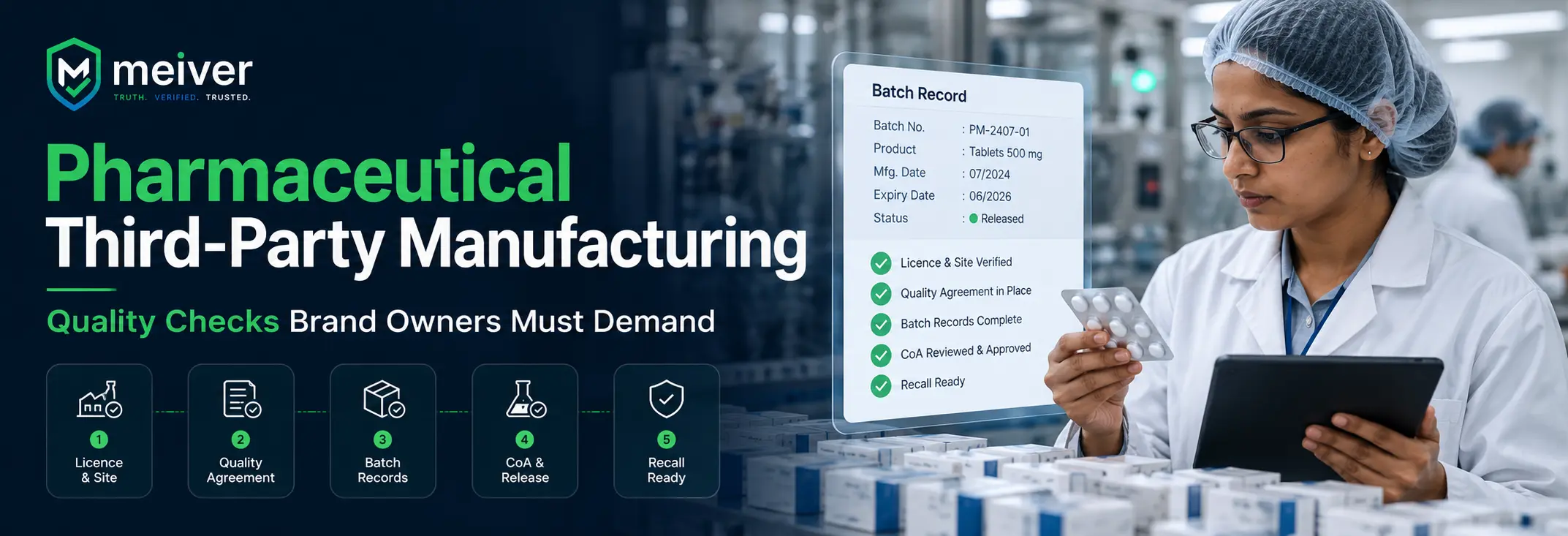
Partner approval | Correct licensing and manufacturing scope | Licence, GMP evidence |
Material receipt | Correct ingredient and supplier lot | Identity results, receipt records |
Production | Approved formulation and processing | Batch records, deviation approvals |
Quality release | Results meet applicable specifications | Batch CoA, release sign-off |
Packing and dispatch | Correct label and traceable distribution | Approved artwork, dispatch records |
5. Make Evidence Accessible With Meiver
Supplier invoices in WhatsApp, production sheets at the factory, and test reports in email make batch questions difficult to answer.
Meiver connects batch records, production stages, supporting documents, CoAs, approvals, and audit history. Its recall management supports action against identified batches, while QR experiences let shoppers access selected product and batch information. meiver.io
This supports informed trust. Recording information or adding a QR code does not independently prove botanical identity, therapeutic efficacy, or compliance.
Conclusion
Authenticity needs a connected record from ingredient receipt to finished pack. Brands gain clearer oversight; manufacturers can demonstrate the care behind their work.
FAQs
Is an “ayurvedic third party manufacturing company near me” necessarily better?
Location can simplify visits, but licensing, technical capability, testing, and accessible records should guide selection.
Is herbal third party manufacturing the same as Ayurvedic medicine manufacturing?
No. Medicines, foods, and cosmetics have different classification and regulatory requirements.