Your manufacturer says the batch is ready. The packaging looks right. Dispatch is tomorrow. Then your quality manager asks: “Which ingredient lot went into this run, and where is its test report?”
The answer is somewhere between a WhatsApp conversation, a spreadsheet and an emailed PDF.
For brands using third party manufacturing in India, control depends on connecting those answers before products reach customers.
1. What is third party manufacturing?
The third party manufacturing meaning is straightforward: an external manufacturer produces goods sold under another company’s brand. It allows brands to access production capabilities without building their own factory.
Third party manufacturing products can include snacks, beverages, supplements, cosmetics and household goods. Across FMCG, the arrangement helps brands scale, but specifications, evidence and responsibilities still need agreement.
For a founder, outsourcing production should come with a clear way to check what happened.
2. Choose a partner who shares evidence
When evaluating a third party manufacturing company in India, look beyond price, samples and promised delivery dates. Ask how the factory handles deviations and whether records will be available for your batches.
Before signing, agree on:
Approved ingredients, suppliers, formulation and packaging specifications.
Testing requirements, acceptance limits and release responsibilities.
Written approval before substitutions or process changes.
Record access, complaint investigation and recall cooperation.
Manufacturers benefit too. Clear expectations reduce disputes over rejected stock, undocumented changes and who approved dispatch.
3. Make quality checks specific to the product
For third party manufacturing of food products, useful controls may include allergen handling, hygiene, seal integrity and storage conditions. A snack brand should be able to connect finished packs to ingredient lots and production records.
For nutraceuticals, agree on relevant checks such as ingredient identity, declared strength, microbial quality and contaminants. FSSAI maintains specific health supplement and nutraceutical regulations; requirements should follow the product’s category and applicable standards. fssai.gov.in
Request a batch-linked Certificate of Analysis (CoA), with methods and acceptance limits. A report from an earlier production run does not establish the quality of today’s batch.
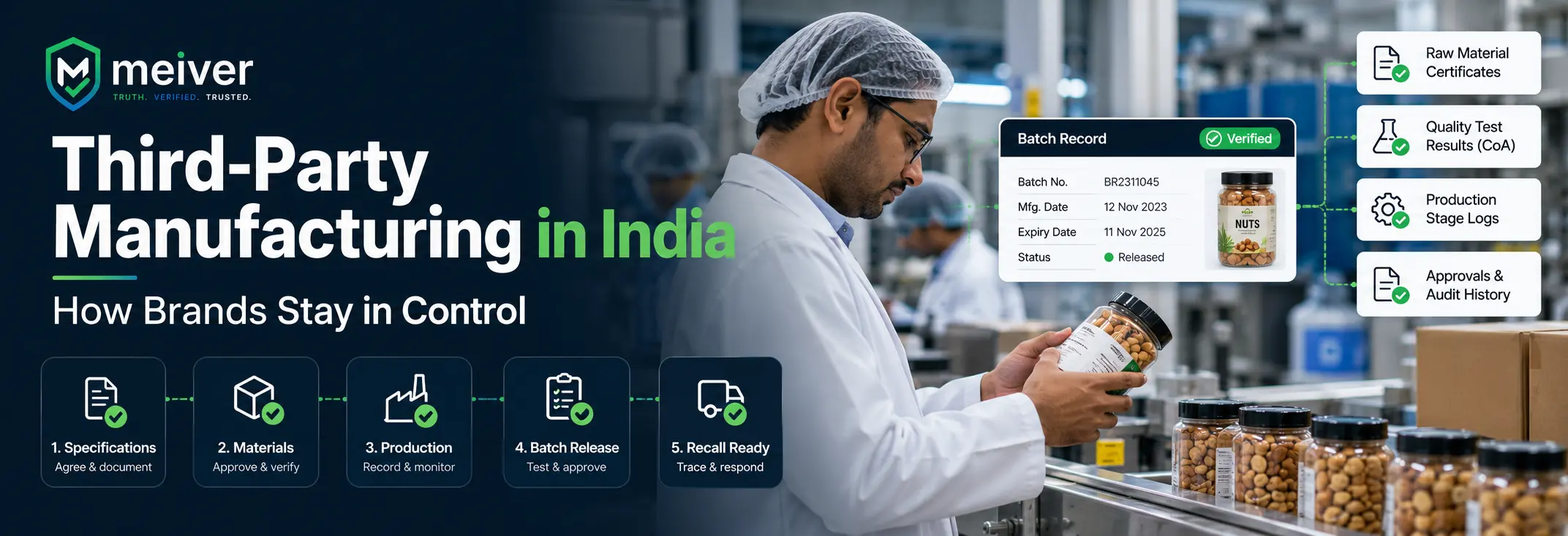
4. Follow five steps to retain control
Process stage | What the brand must control | Evidence to request |
1. Agree specifications | Ingredients, formulation and packaging | Signed specifications and approved samples |
2. Check incoming materials | Supplier approval and ingredient identity | Material lot records and relevant certificates |
3. Record production | Critical stages, deviations and changes | Dated stage logs and deviation approvals |
4. Approve release | Test results and dispatch authorisation | Batch-linked CoA and recorded sign-off |
5. Prepare for recall | Batch destinations and response ownership | Distribution records and recall exercise results |
Keep these records connected through a consistent batch identifier. This makes a retailer’s document request easier to answer and a complaint easier to investigate.
5. Turn batch visibility into trust
Meiver’s batch and stage management features connect production records, quality evidence and approvals. Its documented capabilities also include batch-linked CoAs, audit history and recall management. These help brands and manufacturers work from a shared record. meiver.io
Consumer QR pages add another layer: shoppers can view selected product information and batch evidence. The brand controls what becomes public; confidential operational details can remain internal.
Records support decisions, but their usefulness still depends on accurate entries, appropriate testing and responsible review.
Conclusion: Keep the evidence close
Third party manufacturing works best when every batch has an accountable owner, documented checks and a clear release decision.
For food businesses, FSSAI’s recall regulations require distribution records and specify recall-plan obligations for manufacturers, importers and wholesale suppliers. Prepare before a complaint arrives. fssai.gov.in
Explore Meiver and request a demonstration using one product and its actual batch records.
FAQs
What affects third party manufacturing cost?
Ingredients, minimum order quantities, packaging, testing, wastage, freight and development work affect cost. Compare quotations against the same specifications and quality scope.
Third party manufacturing vs contract manufacturing: what is the difference?
The terms often overlap in commercial use. Contract manufacturing emphasises the agreed production arrangement. Check the contract’s responsibilities, ownership and quality terms rather than relying on the label.