A customer reports a quality issue. An auditor asks for one batch’s production history. A retailer wants proof of origin and laboratory results. Can your team respond in minutes, or must it search through spreadsheets, paper files, emails, and messages?
That is the practical value of food traceability: reliably following ingredients, products, and batches across sourcing, production, quality control, packaging, and distribution.
What Is Food Traceability?
Food traceability is the ability to identify where food came from, what happened during production, and where it went next. A reliable food traceability program connects suppliers, raw materials, batch or lot codes, process stages, quality checks, and dispatch records.
End-to-end food traceability creates a connected product history from source to consumer. It helps manufacturers answer important questions:
Which ingredients entered this batch?
When and where was it produced?
Which quality checks were completed?
Who received the finished products?
Which units must be isolated during a recall?
In simple terms, traceability replaces assumptions with recorded, verifiable information.
Why Food Manufacturers Struggle With Traceability
Many food brands still rely on spreadsheets, paper records, emails, and shared folders. Because this information is scattered across teams, suppliers, and manufacturing partners, finding accurate batch details during an audit, complaint, or recall can be slow and difficult.
Disconnected records can lead to incomplete batch histories, delayed investigations, wider recalls, and higher operational risk. Many packaging QR codes also link only to marketing pages, missing the opportunity to share batch-specific information, quality records, and proof of origin.
A connected food traceability system brings these records together, helping manufacturers improve compliance, respond faster, manage recalls more precisely, and build greater customer trust.
How Does a Food Traceability System Work?
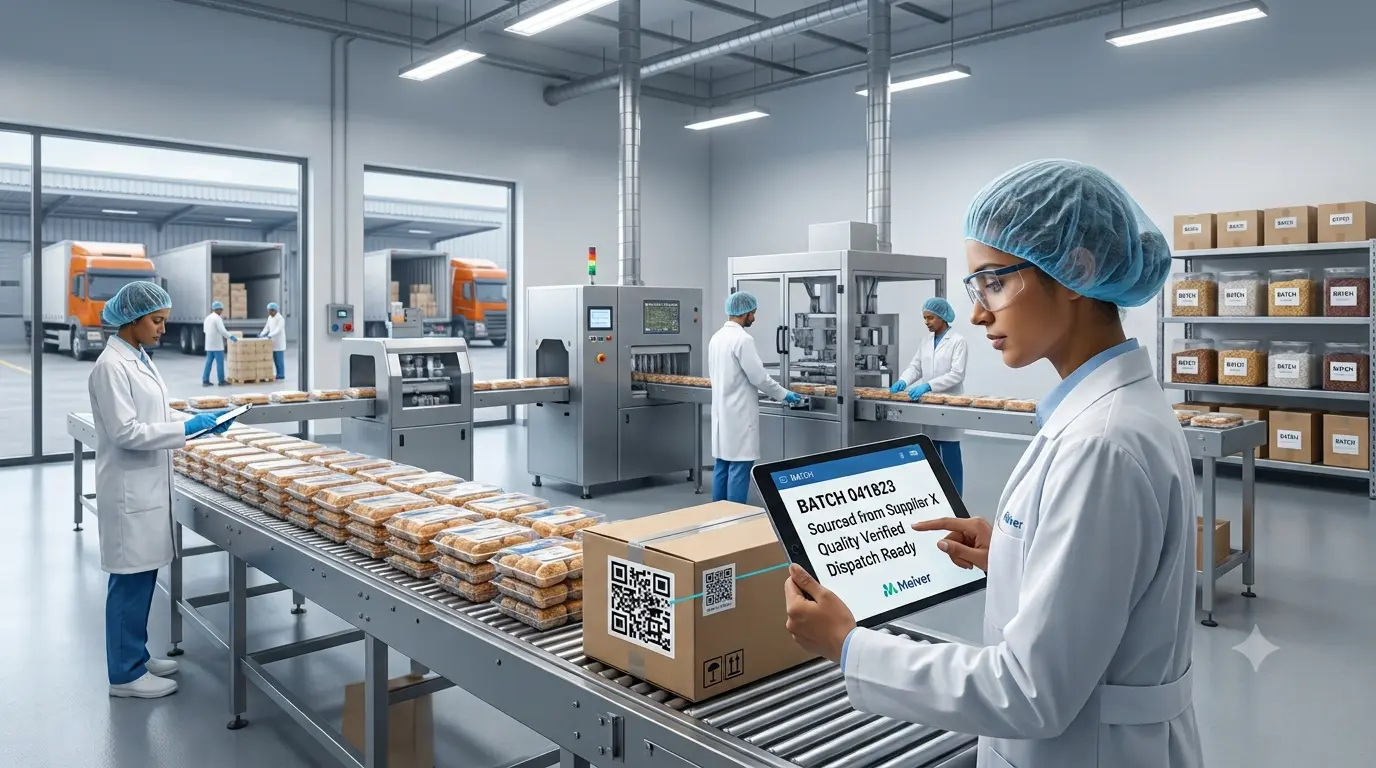
A modern food traceability system creates a structured digital record for every production batch:
Register products, ingredients, and suppliers.
Create the batch with lot, manufacturing, and expiry details.
Record sourcing, processing, quality, and packaging stages.
Attach Certificates of Analysis and supporting documents.
Generate a batch-linked QR code.
Track distribution and retain records for audits or recalls.
Unlike manual recordkeeping, food traceability software keeps these records connected and searchable. Effective food traceability solutions should support batch management, configurable production stages, document control, recall readiness, and controlled data sharing.
QR Code Food Traceability: Turning Packaging Into Proof
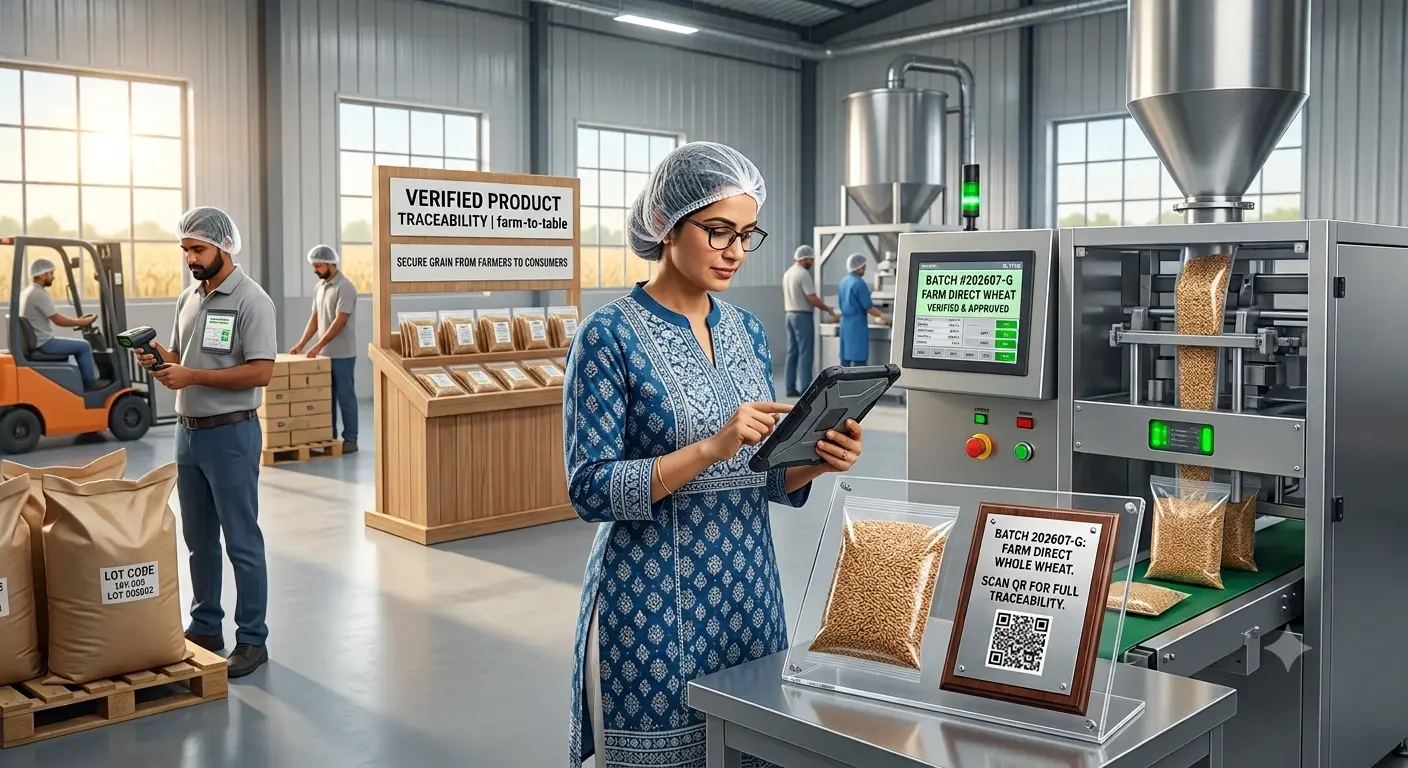
QR code food traceability allows consumers, retailers, and auditors to scan a pack and access relevant product information. However, the QR code is only an entry point. Its value depends on the verified data behind it.
A useful verification page can display the batch number, sourcing journey, production stages, quality results, and Certificate of Analysis. Packaging then becomes a trust-building touchpoint rather than only a promotional surface.
Consumers are no longer simply being told that a product is trustworthy. They are being given information that helps them verify it.
How Meiver Helps Food Brands Build Verifiable Trust
Meiver combines batch tracking, production records, quality documentation, and consumer transparency in one platform. Food brands can create batches, record production stages, attach CoAs and supplier documents, generate unique QR codes, and manage recalls without maintaining several disconnected tools.
Eligible Meiver plans also support blockchain anchoring, helping create tamper-evident proof for important batch records. This positions Meiver as more than food traceability software. It is product trust infrastructure that helps manufacturers prove the story behind every product.
Process Infographic: From Ingredient to Verified Product
Step | Process Stage | Information Captured |
1 | Supplier & Raw Material | Ingredient origin, supplier details, source location, quantity received, and initial quality checks |
2 | Batch Creation | Batch or lot code, product name, manufacturing date, expiry date, planned quantity, and production facility |
3 | Production Tracking | Production stages, timestamps, responsible team members, process parameters, and in-process quality checks |
4 | Quality & CoA Verification | Laboratory test results, Certificate of Analysis documents, specification limits, and pass/fail status |
5 | QR-Enabled Packaging | Unique batch-linked QR code, packaging details, label information, and verified product data |
6 | Consumer Verification & Recall Readiness | QR scan history, batch journey, quality information, recall status, and consumer notifications |
Conclusion
Food traceability is no longer only a compliance task. It helps food brands respond faster, reduce operational confusion, prepare for audits, and provide credible proof of product quality and origin.
Meiver replaces scattered records with one connected food traceability system.
Where every product has a story, Meiver verifies it.
Ready to build verifiable product trust? Book a Meiver demo or start for free.
FAQs
What is the main purpose of food traceability?
Food traceability identifies the history and movement of food, ingredients, and batches. It supports quality management, audits, complaint investigations, and product recalls.
Is a QR code enough for food traceability?
No. A QR code must connect to accurate, batch-specific records. Without reliable information behind it, the QR code is only a link.
Can small food brands implement a food traceability program?
Yes. A scalable food traceability program helps smaller brands establish strong batch-recording practices early and expand them as production increases.