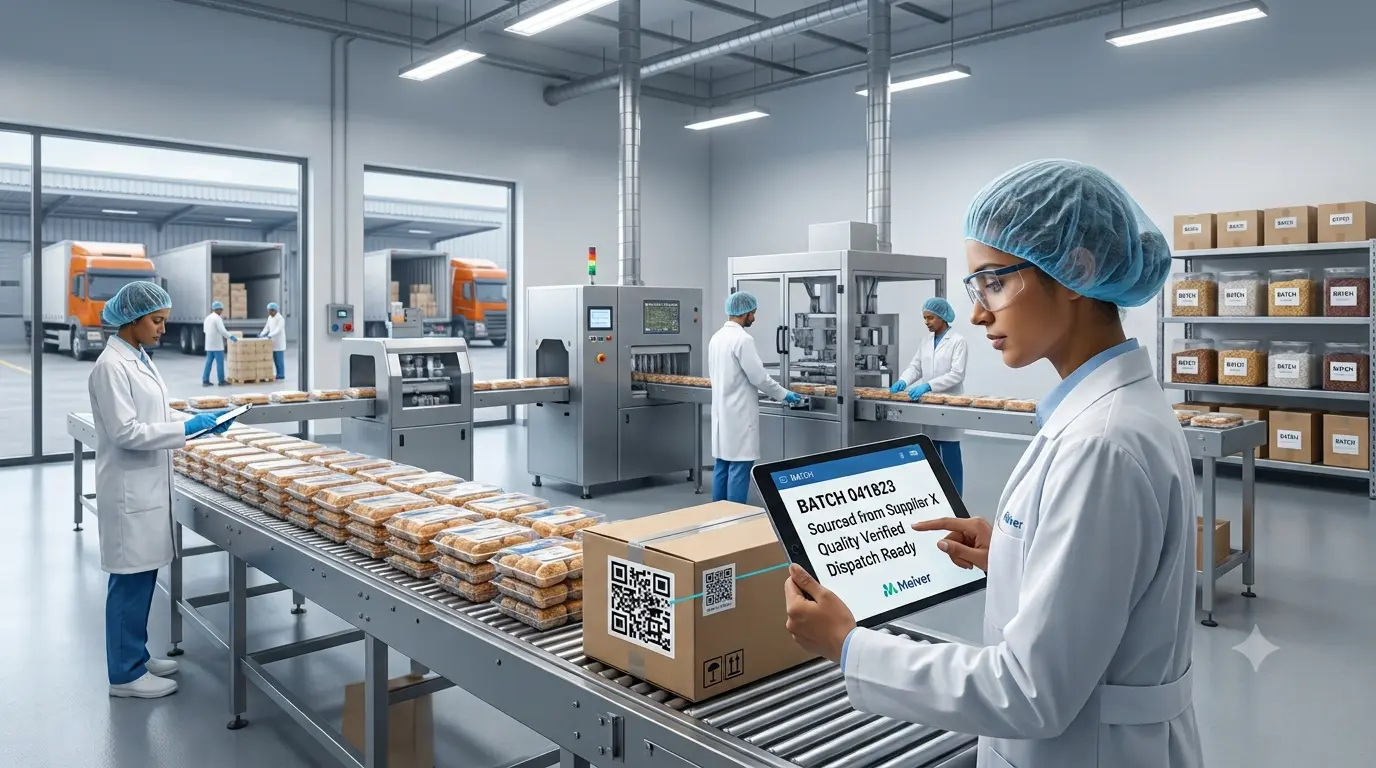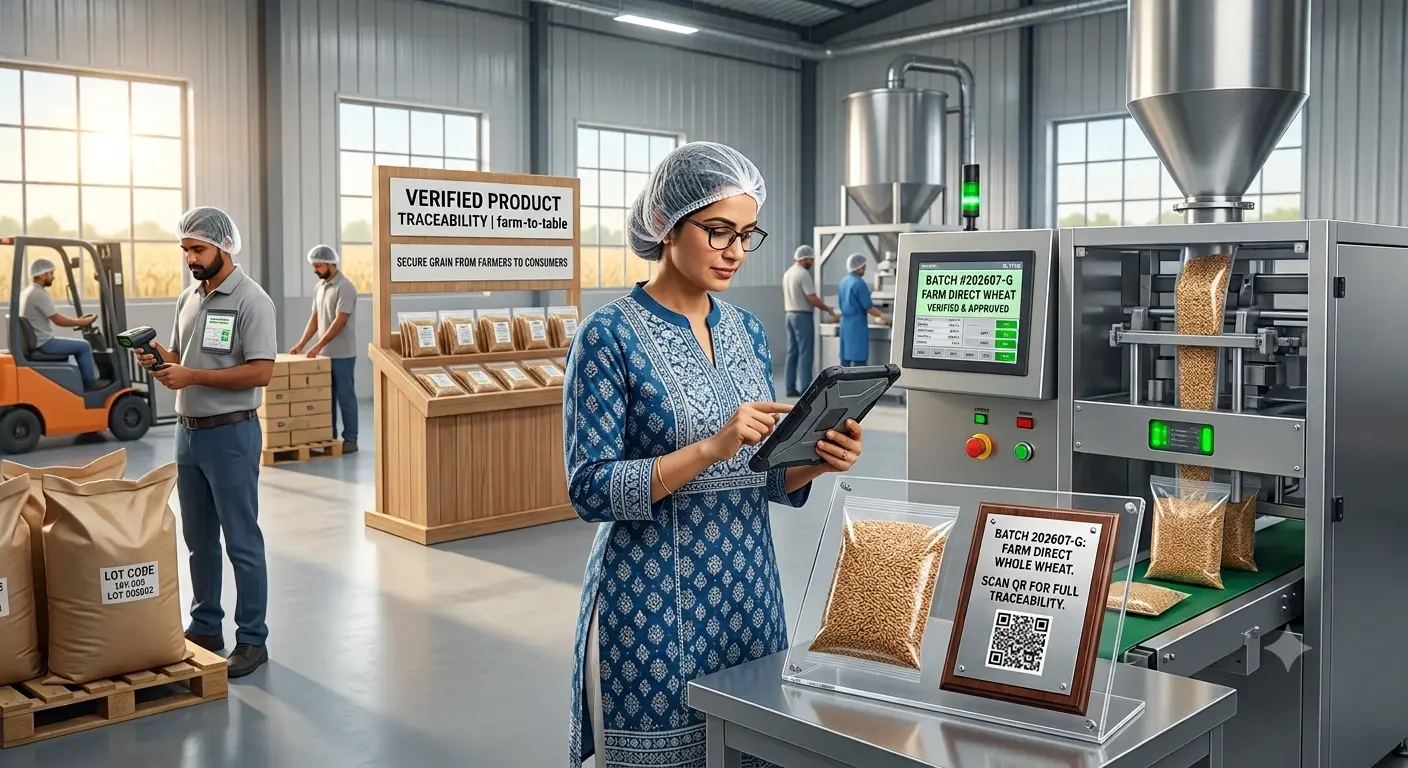
A food recall may begin with one failed test, supplier warning, packaging error, or customer complaint. The damage grows when teams cannot quickly identify the affected lots.
Batch traceability connects ingredients, production records, quality checks, and distribution details to a specific lot. It cannot prevent every recall, but it can detect problems earlier, contain risk, and avoid withdrawing unaffected products.
Food Recall Prevention Starts Before the Incident
Effective food recall prevention depends on reliable records created during daily operations not after a problem appears. Brands should capture:
Supplier and raw-material lot numbers
Production dates, facilities, and processing stages
Quality results and Certificates of Analysis
Packaging codes, expiry dates, and released quantities
Distributor, retailer, and shipment information
This creates a searchable chain between an issue and every finished product that may be affected.
How Batch Traceability Improves the Food Recall Process
With spreadsheets, paper files, and messages, the food recall process becomes a manual investigation. Batch traceability for food recalls replaces that search with connected records.
Teams can identify a suspect batch, review its ingredient and stage history, verify quality evidence, and trace where the lot moved. This enables batch-level recall management, helping the business isolate the smallest defensible scope instead of recalling an entire product range.
Build a Faster Food Recall Management Workflow
A practical food recall plan should define responsibilities, escalation rules, communication channels, required records, and mock-recall testing. During an incident:
Record the complaint, failed test, or supplier alert.
Assess the hazard and place related inventory on hold.
Trace backward to ingredients and forward to customers.
Identify affected lots and activate the recall.
Document recovery, disposal, communication, and closure.
Digital food recall management software helps teams complete these steps from one source of truth instead of rebuilding evidence under pressure.
Food Recall Procedure: FSSAI and Global Expectations
For businesses researching the food recall procedure FSSAI expects, India’s Food Safety and Standards (Food Recall Procedure) Regulations, 2017 establish requirements for removing unsafe or non-compliant food from the market. FSSAI guidance also covers recall planning, traceability, communication, and reporting.
The principle is similar globally. The US FDA defines traceability as following food and ingredients backward and forward through the supply chain. EU guidance emphasizes rapid source identification, risk containment, and removal of affected products.
Process Infographic: From Warning to Controlled Recall
1. SIGNAL DETECTED | 2. BATCH IDENTIFIED | 3. RECORDS VERIFIED | 4. AFFECTED LOTS ISOLATED | 5. RECALL COMMUNICATED & CLOSED |
A complaint, failed quality test, supplier warning, or lab alert indicates a possible food safety issue. | The relevant batch code, production date, SKU, and facility are identified immediately. | Supplier details, raw-material lots, production stages, quality checks, and Certificate of Analysis records are reviewed. | Shipment and distribution records are checked to locate affected products and separate them from unaffected batches. | Customers and supply-chain partners are informed, products are recovered, and the recall is documented and formally closed. |
Key Record: Complaint or lab alert | Key Record: Batch or lot code | Key Record: Supplier, production, and CoA records | Key Record: Shipment destinations and inventory status | Key Record: Consumer communication, recovery status, and final report |
Turn Food Traceability and Recall Data into Readiness
Food traceability and recall management work best when records are updated continuously. Meiver helps brands connect batches with production stages, documents, approvals, QR verification, and recall workflows. It can also support notifications to consumers who scanned an affected batch.
Internal links: Batch and Stages Management | Recall Management | Food and Beverages | Pricing
Conclusion
The goal is not only to react faster. It is to identify warning signs, narrow exposure, and protect consumers before uncertainty becomes a larger crisis. Accurate batch records and a tested recall plan make every response more controlled and defensible.
Start using Meiver to turn scattered production data into recall-ready traceability.
FAQs
What is batch-level recall management?
It is the ability to identify and manage only the production lots affected by a safety or compliance issue.
Can traceability prevent every food recall?
No. It reduces preventable errors, improves early detection, and limits the scale of recalls that still occur.
What should food recall management software include?
It should connect batch records, ingredients, quality documents, distribution data, audit history, recall status, and communication workflows.