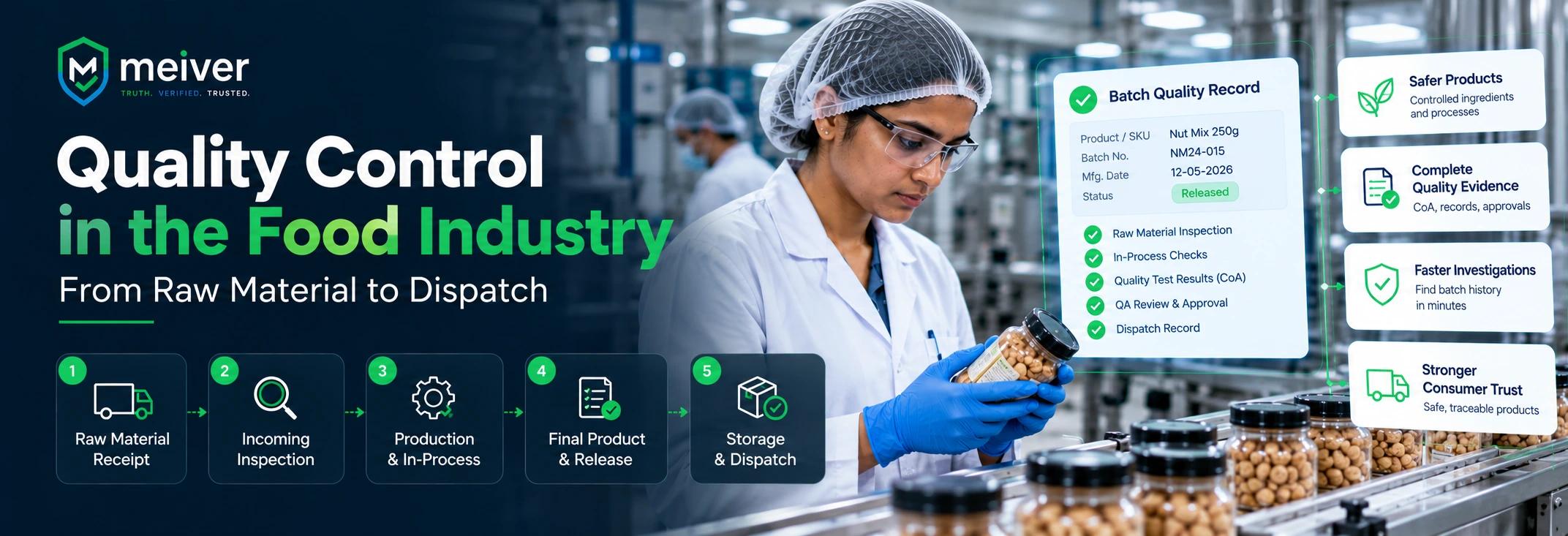
Food quality problems rarely begin at inspection. They can start with an incoming ingredient, a missed process check, an incorrect label or stock dispatched before release. That is why quality control in food industry operations should work as a connected chain—from raw material receipt to dispatch.
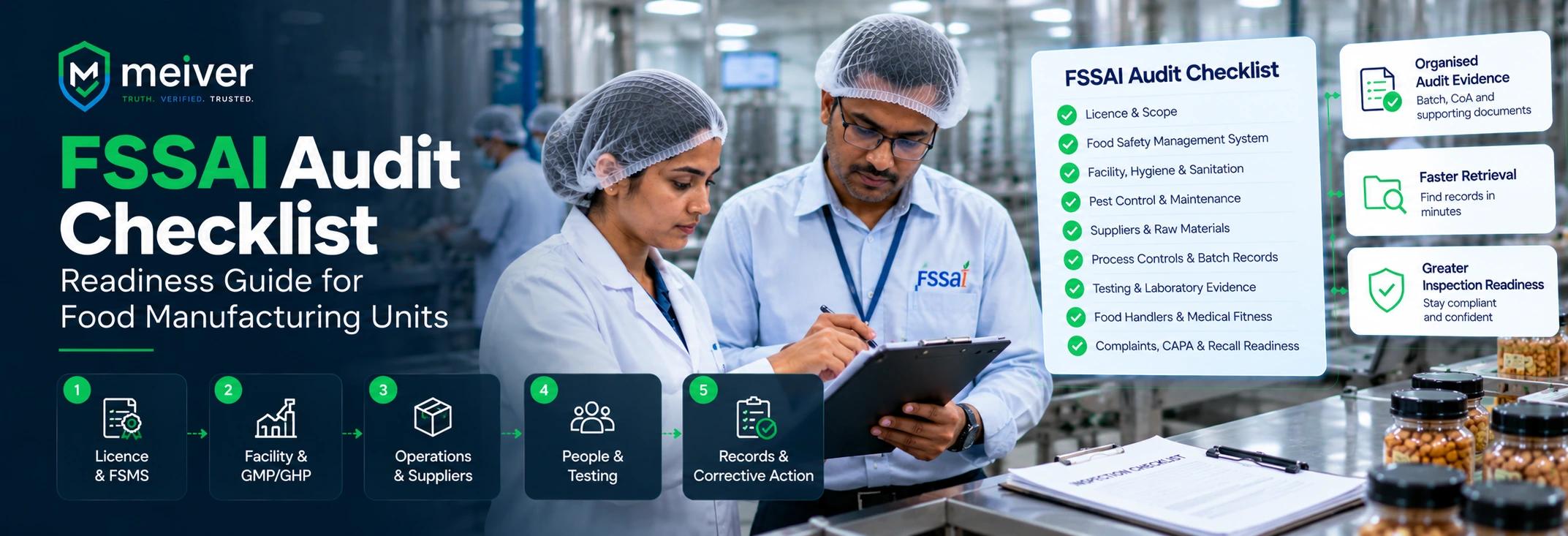
For manufacturers, FSSAI requires licensed food businesses to maintain a documented Food Safety Management System (FSMS) and comply with Schedule 4 hygiene requirements. FSSAI
What Is Food Quality Control?
Food quality control (QC) checks whether materials, in-process output and finished products meet defined specifications through inspection, measurement and testing.
Quality Assurance (QA) is broader: it defines specifications, procedures, supplier controls, records, approvals, deviations, corrective actions and verification.
QC asks, “Does this material or batch meet specification?” QA asks, “Is the system controlled so that it consistently should?” That distinction is central to food quality control and assurance.
1. Start With Raw Material Inspection
At receipt, verify the supplier, material lot, quantity, condition and required documents. The raw material inspection quality control step may include identity checks, specification review, sampling or testing where applicable. The decision should be clear: accept, reject or quarantine.
2. Control the Process, Not Only the Finished Product
During manufacture, teams may monitor process parameters, hygiene checks, in-process results and deviations. The importance of food quality control is detecting variation early enough to prevent avoidable rework, unsafe release or a larger investigation.
Quality-Control Process: Raw Material to Dispatch
Stage | Typical quality evidence | Key decision |
01. Raw material receipt | Supplier, lot, condition, quantity, documents/CoA | Inspect or hold |
02. Incoming inspection | Identity/specification checks; sampling/testing where applicable | Approve, reject or quarantine |
03. Production / in-process | Process parameters, hygiene checks, IPC results, deviations | Continue, correct or stop |
04. Finished product / release | Results, CoA, reconciliation, QA review | Release or reject |
05. Storage / dispatch | Storage conditions, stock status, batch and dispatch records | Ship released, traceable stock |
3. Testing Should Be Product- and Risk-Based
A food quality control system should not assume every batch needs every possible external laboratory test. Testing parameters and frequency depend on applicable regulations, food quality control standards, specifications, historical data, risk assessment and the manufacturer’s FSMS.
For nutraceuticals, FSSAI also provides sector-specific FSMS guidance covering health supplements and nutraceutical manufacturing. FSSAI
4. When Quality Evidence Becomes a Traceability Problem
A customer reports an off-taste. Can QA immediately see the supplier lot, incoming inspection, production checks, finished-product evidence and dispatch history for that batch—or are the answers spread across spreadsheets, PDFs, email and WhatsApp?
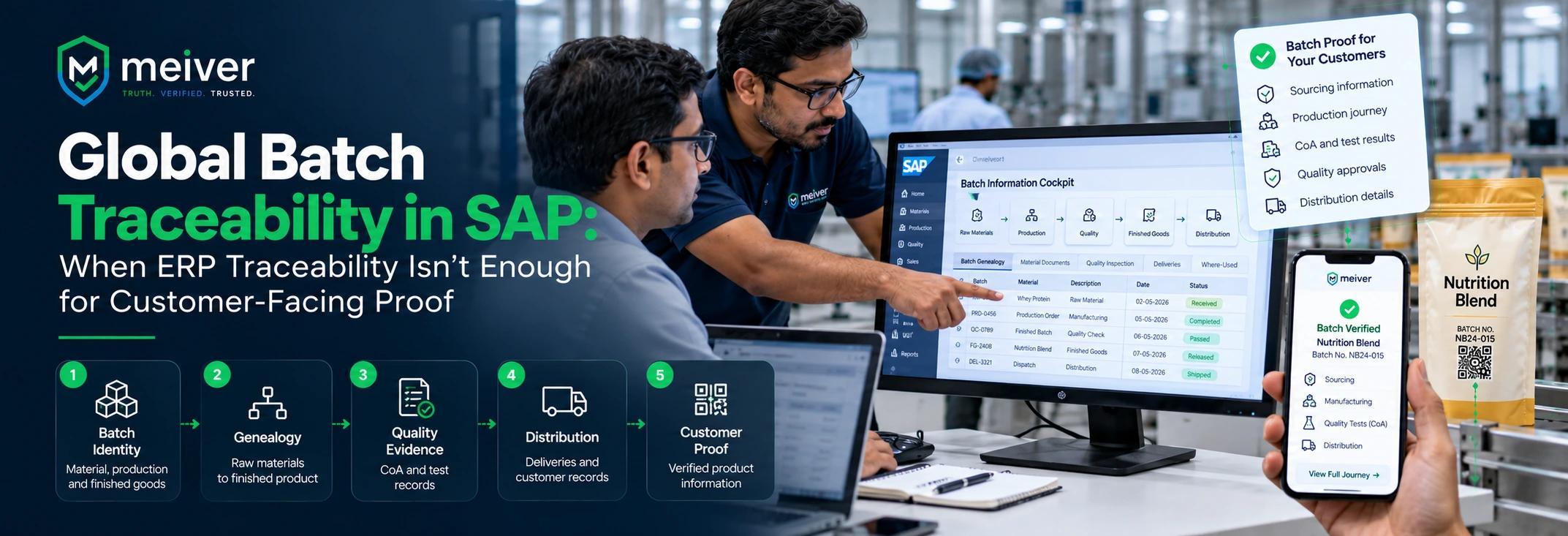
This is where food quality control software can be misunderstood. QC processes and laboratories generate evidence; traceability systems help keep that evidence connected to the right batch.
Meiver connects batch records with production stages, supporting documents, approvals and CoA information. MeiverFeatureReference Stage records can also capture who performed an activity, when, where and relevant process data. MeiverFeatureReference
5. Build for Proof, Not Paperwork
Connected records support faster investigations, release decisions and recall response. FSSAI’s recall regulations require distribution records including supplier and customer information, lot numbers, batch codes and manufacturing or expiry details—showing why traceability matters beyond production. FSSAI
Conclusion
Food quality control is not a final-product test. It is a series of controlled decisions from receipt to dispatch. When those decisions stay connected to the batch, teams can answer quality questions with evidence.
See how Meiver connects batch records and quality evidence.
FAQs
1. What is food quality control?
Inspection, measurement and testing used to determine whether materials, in-process output and finished food meet defined requirements.
2. Why is raw material inspection important?
It helps identify non-conforming inputs before production and preserves supplier- and lot-level evidence.
3. Is QA the same as QC?
No. QC checks outputs against specifications; QA manages the wider system designed to produce consistent results.
4. Does Meiver perform laboratory testing?
No. Labs and QC teams generate test evidence; Meiver helps connect relevant batch, stage and CoA records for traceability and retrieval.