A retailer asks for the test report for one batch. Your team finds a certificate, but nobody can confirm whether it covers the stock delivered last week.
In private label manufacturing, this gap can turn a routine question into a scramble. Before signing, brands and manufacturers should agree what evidence follows every batch—and how quickly each party can retrieve it.
1. Define the records, not just “quality documents”
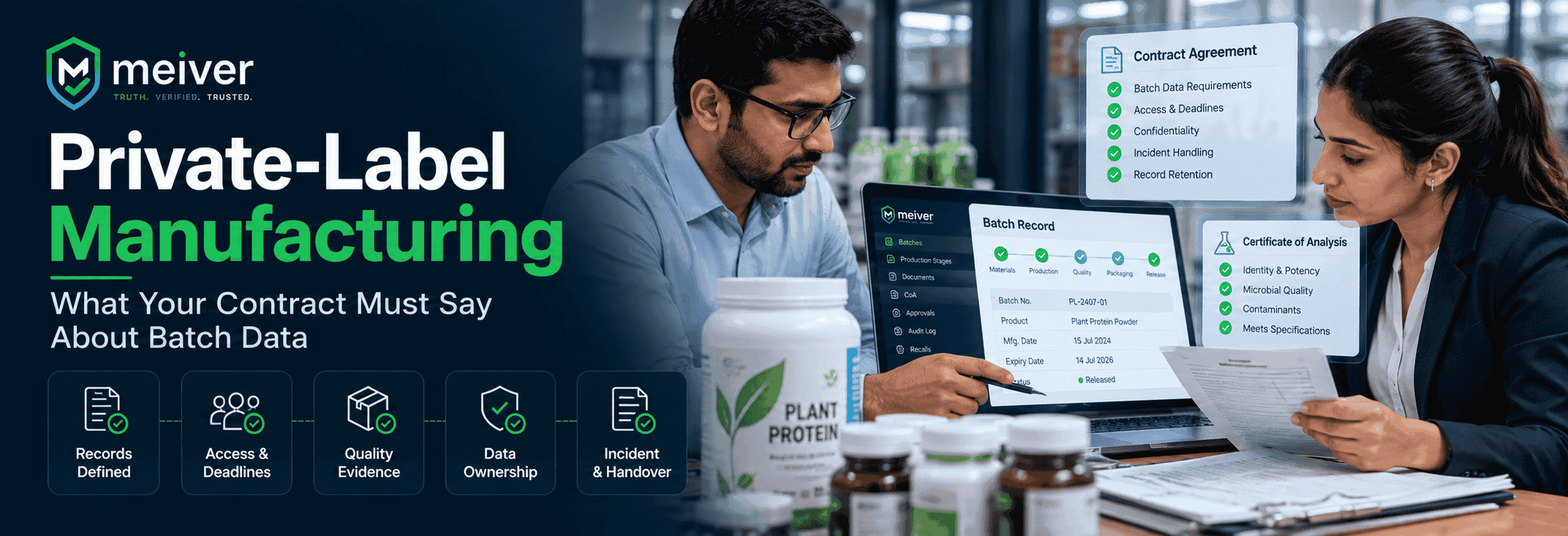
A contract manufacturing agreement should identify the records covered: batch numbers, ingredient-lot references, production-stage evidence, Certificates of Analysis (CoAs), packaging checks, deviations, and release approvals.
For food private label manufacturers, this might include ingredient and allergen checks. For supplement manufacturers, specify relevant identity, potency, microbial, and stability evidence according to the product and agreed testing plan.
Require documents to identify the batch they support. A generic product certificate cannot answer every batch-specific question.
2. Set access deadlines and responsibilities
“Available on request” leaves too much room for disagreement. Name authorised users, responsible contacts, delivery formats, and deadlines for routine and urgent requests.
When comparing private label manufacturers in India, ask who uploads records, who reviews them, and which evidence must be available before dispatch. Agree how incomplete records affect approval.
A practical contract manufacturing contract can reference a separate quality/data schedule. FDA’s drug-manufacturing guidance offers useful documentation principles, but it is not Indian food or supplement law. fda.gov
3. Separate access from ownership
Paying for production should not be treated as automatic ownership of every formula, process, or manufacturing record.
Specify rights to inspect, copy, retain, and use product-specific evidence. Separately protect the manufacturer’s existing formulations, confidential processes, supplier arrangements, and other clients’ information.
Define permitted disclosure to laboratories, auditors, regulators, and retailers, including necessary approvals and legally required disclosures.
This balance gives brands usable evidence while protecting private label manufacturers from unrestricted disclosure of their know-how.
4. Plan for problems and contract exit
Your third party manufacturing agreement should name incident contacts and establish notification deadlines, investigation responsibilities, and access to affected-batch records.
Agree how supplier, formulation, process, and testing changes are communicated and approved. During a complaint, teams need the actual production history, relevant test results, and distribution references.
Also specify retention periods, readable copies, handover deadlines, and continuing incident support after termination. Deletion arrangements must respect applicable recordkeeping obligations; closing the commercial relationship should not leave either party without essential evidence.
5. Turn the agreement into a working process
Process stage | What to agree | Evidence to keep |
Define records | Required batch information | Approved record list |
Agree access | Users, formats, deadlines | Access and responsibility schedule |
Capture and review | Recording and approval responsibilities | Linked reports and sign-offs |
Manage incidents | Escalation and investigation steps | Incident records and communications |
Retain and hand over | Retention and exit arrangements | Readable copies and handover confirmation |
6. Share proof without exposing confidential details
A shopper checking a protein claim needs understandable evidence connected to their pack. They do not need the manufacturer’s confidential recipe.
meiver connects batch records, supporting documents, approval workflows, and audit history. Role-based access and consumer visibility settings help teams put agreed sharing practices into operation. MeiverFeatureReference
Approved information can support QR experiences and useful content linked from product pages. This creates opportunities for engagement without promising more traffic or proving safety merely through a scan.
Conclusion
Clear batch-data terms help founders, procurement teams, quality managers, and manufacturers answer difficult questions together. meiver supports these practices; contractual ownership and legal rights remain matters for the agreement.
FAQs
Is a contract manufacturing agreement doc enough?
A template needs product-specific records, responsibilities, deadlines, and professional review.
Must every batch document be public?
No. Agree which information stays confidential and which approved evidence consumers can see.