A promising sample, a competitive quotation, and reassuring calls can make a manufacturer feel like the right choice. The harder questions arrive later: Why did the texture change? Which ingredient lot went into this batch? Who approved dispatch?
When comparing third party manufacturing companies, look beyond price. For Indian founders, procurement teams, and quality managers, a reliable partner should demonstrate capability, share agreed evidence, and respond when something goes wrong.
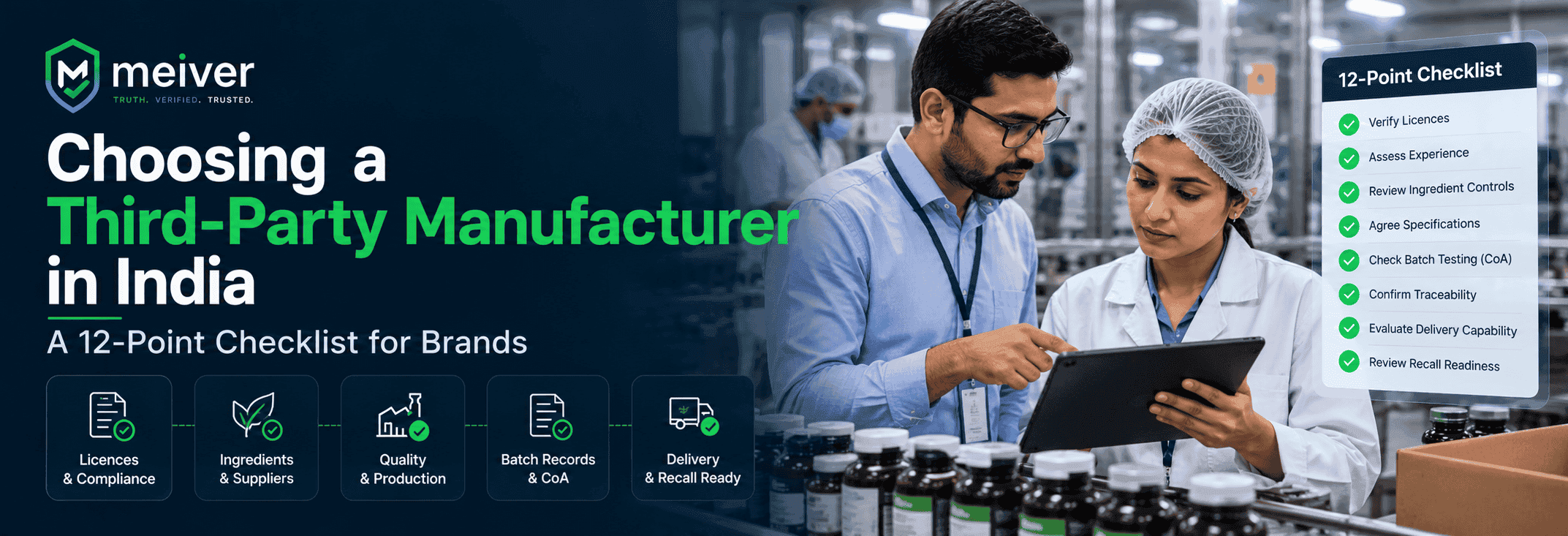
Use this vendor qualification checklist across FMCG, with food and nutraceutical examples. It is a recommended assessment framework; legal requirements depend on the product category.
1. Check Legitimacy and Manufacturing Fit
1. Verify appropriate licences. Check validity, facility address, authorised activities, and relevant product scope. Food, cosmetics, and medicines follow different regulatory frameworks.
2. Confirm relevant experience. Ask for examples involving your format and process. Making biscuits does not automatically establish competence in probiotic powders or protein bars.
3. Assess hygiene and safety controls. Review cleaning, pest control, allergen handling, and hazard management. For licensed food businesses, examine documented food safety management and applicable Schedule 4 requirements—not merely a certificate on the wall. fssai.gov.in
2. Establish Ingredient and Product Control
4. Review raw-material controls. Request ingredient specifications, supplier qualification records, and incoming inspection evidence. Ask how rejected materials are segregated and prevented from entering production.
5. Agree specifications and change control. Document formulation, tolerances, sensory standards, and approval requirements. Ingredient substitutions should trigger an agreed review process before implementation.
6. Evaluate pilots and scale-up. Compare pilot output against specifications. In food contract manufacturing, a good kitchen sample needs evidence that commercial equipment can reproduce its taste, texture, and consistency.
3. Demand Evidence for Every Batch
7. Define testing and acceptance. Agree methods, limits, sampling, and release responsibilities. Request batch-specific Certificates of Analysis (CoAs), with results clearly linked to the supplied lot.
8. Examine shelf-life and packaging evidence. Ask what supports the expiry date, packaging choice, and storage conditions. For probiotics, investigate whether viability is supported through the stated shelf life.
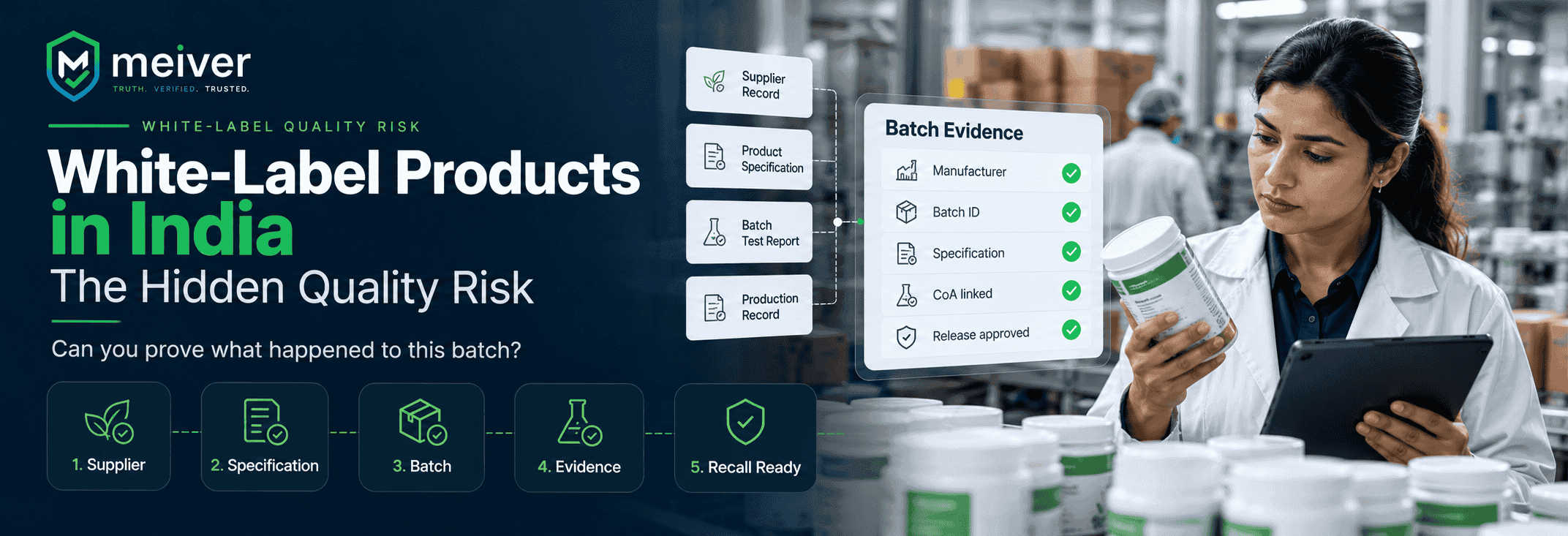
9. Test traceability and record access. Pick a batch and ask the manufacturer to identify its ingredient lots, production stages, and destinations. Agree retrieval deadlines. Food recall regulations connect traceability with following food through production, processing, and distribution. fssai.gov.in
4. Make the Partnership Accountable
10. Validate delivery capability. Confirm capacity, minimum order quantities, lead times, and previous delivery performance. Ask how peak demand, equipment downtime, and delayed materials are handled.
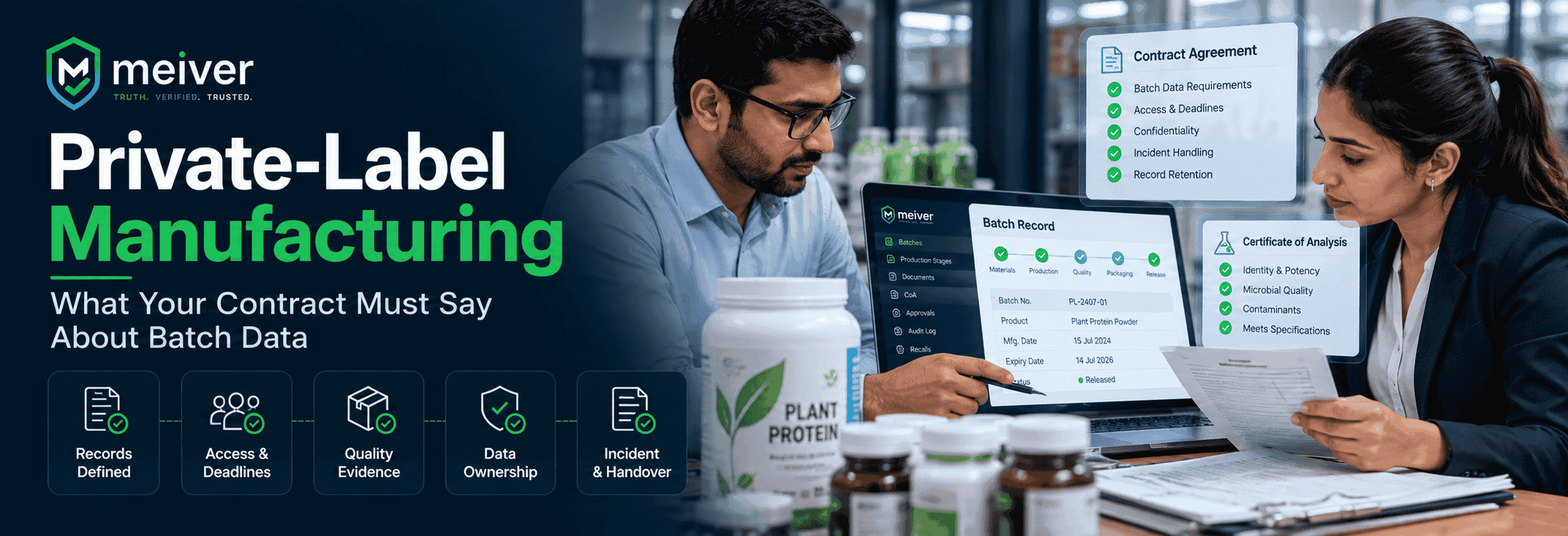
11. Clarify costs and responsibilities. Your third party manufacturing contract should address testing charges, packaging losses, payment terms, confidentiality, data access, and ownership of relevant records.
12. Review incident readiness. Request complaint procedures, corrective-action examples, and recall arrangements. Establish named contacts and escalation timelines before the first commercial shipment.
5. Follow a Qualification Process
Apply these steps when assessing contract manufacturing companies in India:
Qualification stage | Action | Evidence or outcome |
Shortlist | Check category and capability fit | Relevant experience |
Verify | Review licences and quality documents | Verified scope |
Assess | Audit and evaluate samples | Identified gaps |
Agree | Define specifications and responsibilities | Signed agreement |
Monitor | Review batches and performance | Ongoing oversight |
Conclusion: Keep Visibility After Selection
Choosing a third party manufacturing company starts the relationship; ongoing evidence sustains it. Manufacturers benefit too: clear records help demonstrate reliability and answer customer questions.
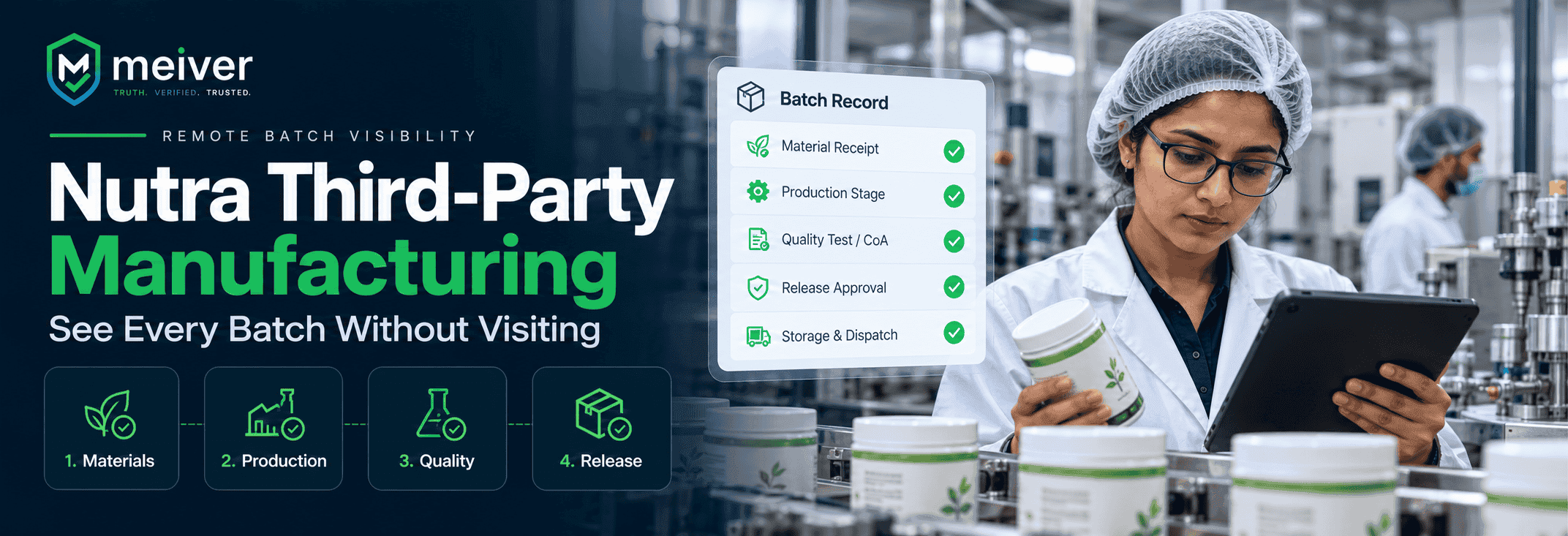
Meiver connects batch records, production stages, quality documents, approvals, audit history, and recall management. Approved consumer-facing information can also make product claims easier to inspect, supporting transparency and trust. Meiver supports oversight; it does not independently certify factories.
Explore how Meiver helps you maintain batch visibility after choosing your manufacturing partner.
FAQs
How do I identify the best third party manufacturing companies in India?
Compare category fit, verified evidence, pilot performance, and accountability. Suitability matters more than unsupported rankings.
What makes a top third party manufacturing company dependable?
Repeatable quality, accessible batch records, realistic commitments, and effective responses when problems occur.