For Indian food, beverage and food-regulated nutraceutical brands, the first purchase is only half the battle. Customers may try because of an ad, influencer or marketplace offer. Repeat purchase depends on something harder to earn: confidence.
EY-Parthenon’s 2026 India research found that usage experience and brand trust play an important role in repeat purchases across consumer-health categories. In wellness, 56% of surveyed consumers preferred online buying, making digital trust signals increasingly relevant. EY
Retention starts with product performance. Verification gives customers another reason to believe in the next purchase.
Why Brand Trust Matters After the First Order
The importance of customer retention is simple: acquisition gets attention; retention builds the relationship after the sale. When customers reorder or recommend, they are acting on accumulated experience and trust.
EY’s 2025 Future Consumer Index found that 47% of Indian respondents would return to branded products for superior taste, quality or performance. Customer retention vs acquisition is therefore not just a media-spend question; it is also about product confidence. EY
What Does a “Verified Brand” Mean?
Here, a verified brand is not a formally certified or independently approved brand. It is a brand that makes relevant product evidence accessible and checkable instead of relying only on claims.
That evidence may include batch identity, sourcing information, production journey, test details and relevant CoAs.
Verification means making evidence checkable—not awarding the product a blanket seal of approval.
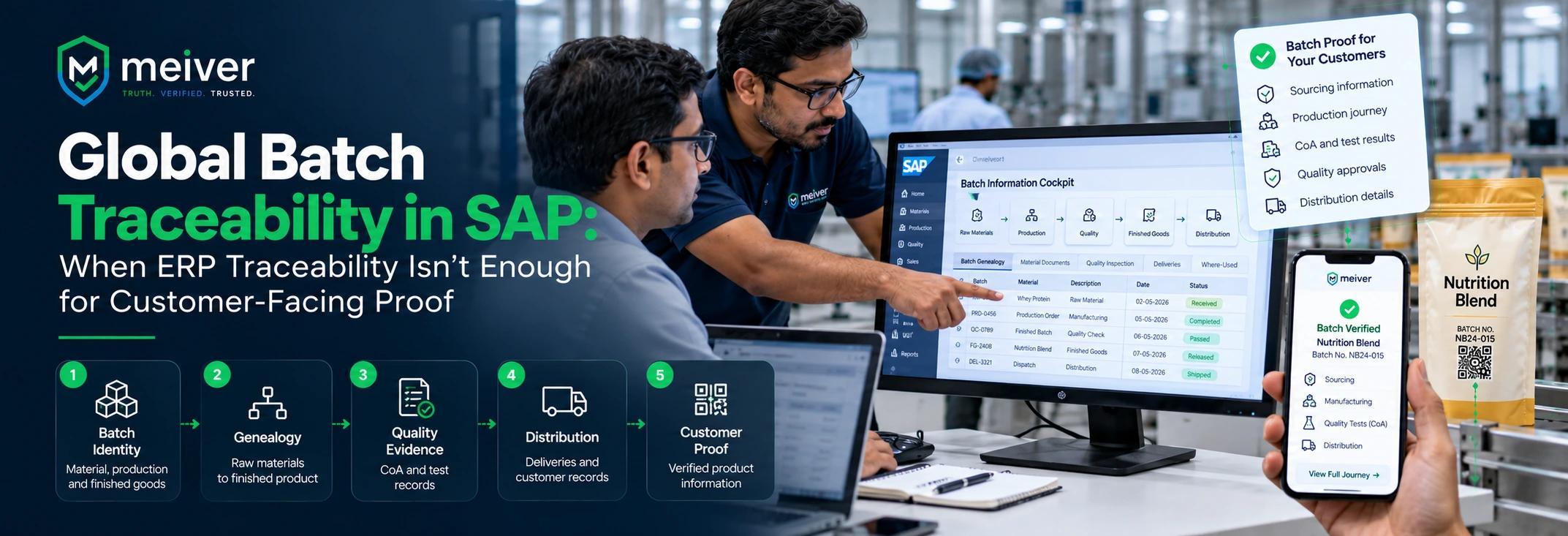
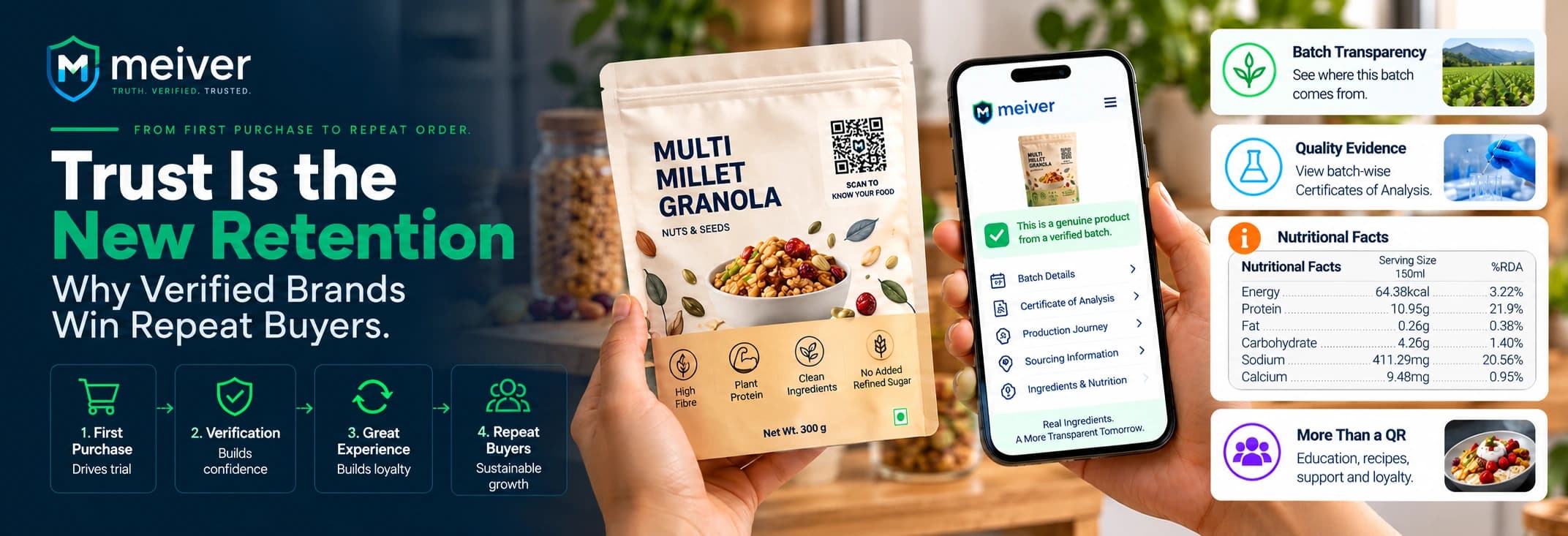
Meiver connects batch data, traceability records, CoAs and consumer-facing QR verification so brands can make product-specific information accessible when questions arise. Meiver Page Structure
EY’s 2026 research also highlights stronger quality signalling, including QR codes for authenticity and ingredient information, as a trust-building opportunity within vitamins, minerals and supplements. EY
How Verification Can Support Customer Retention and Loyalty
A customer who sees “lab tested” or “traceable ingredients” may ask, “Can I check that?” A verification journey can answer without relying on marketing copy alone.
Process Infographic: From Product Claim to Repeat Purchase
Customer Moment | What the Brand Provides | Retention Effect |
1. Claim | Clear product or quality claim | Creates interest |
2. Question | QR code or verification path | Gives customers somewhere to check |
3. Scan | Batch, origin or quality information | Adds product-specific context |
4. Verify | Evidence linked to that product or batch | Can reduce uncertainty |
5. Return | Good experience plus accessible proof | Strengthens the basis for repeat purchase |
Customer Retention Strategies Should Travel With the Product
Many customer retention strategies focus on discounts, loyalty points, email or WhatsApp reminders. These can encourage another order, but they do not necessarily answer questions about authenticity, quality or safety.
For customer retention in ecommerce, verification can create a useful post-purchase trust touchpoint across D2C websites, marketplace pages, packaging QR journeys, customer support, social content, referrals and post-purchase education.
This is where customer loyalty and customer retention reinforce each other: customers are not only told what to believe; they can inspect the evidence behind the product.
How to Improve Customer Retention Without Relying Only on Offers
Brands asking how to improve customer retention should start with the fundamentals: make a good product, deliver consistently and communicate clearly. Then make important claims easier to verify.
Meiver supports this through traceability, batch and stage management, CoAs, Consumer QR Verify, recall management and analytics. Meiver Page Structure Rather than adding another promotional layer, it helps brands carry product trust from the supply chain to the customer.
That can strengthen customer retention and loyalty without pretending that technology alone creates repeat buyers.
Conclusion
Trust is not new, but digital verification makes it more operational. Where ingredients, testing, authenticity and safety matter, accessible evidence gives customers one more reason to stay confident after the first purchase.
A strong product earns the first repeat order. Verifiable proof can help protect the confidence behind the next one.
FAQs
1. What is customer retention?
Customer retention is a brand’s ability to keep existing customers buying over time rather than relying only on acquiring new customers.
2. How does brand trust affect customer retention?
Brand trust can reduce uncertainty and support repeat purchase when product experience, service and value are also strong.
3. What is the difference between customer retention and acquisition?
Acquisition focuses on winning new customers. Retention focuses on keeping existing customers satisfied, engaged and willing to buy again.
4. How can ecommerce brands improve customer retention?
To improve customer retention, combine product quality, reliable service, relevant follow-up and verifiable product information. Discounts may encourage another order, but lasting confidence requires more than incentives.